2026 Best Nickel Base Alloy Castings for Global Buyers?
In the evolving landscape of manufacturing, Nickel Base Alloy Castings stand out for their exceptional properties. Industry expert Dr. Emily Thompson emphasizes, "The versatility of Nickel Base Alloy Castings makes them critical for high-performance applications." This statement underscores their importance in sectors such as aerospace and energy.
Nickel Base Alloy Castings offer unique resistance to corrosion and high temperatures. The demand for these alloys is rising globally. Manufacturers are recognizing the value of these castings in enhancing product longevity and performance. With the right alloy composition, these castings can outperform traditional materials.
However, achieving optimal performance isn't always straightforward. Factors like alloy formulation and casting techniques require careful consideration. The industry's complexity can lead to challenges that stakeholders must navigate. As buyers seek the best options available, understanding the intricacies of Nickel Base Alloy Castings becomes essential for informed decision-making.

Overview of Nickel Base Alloys and Their Applications
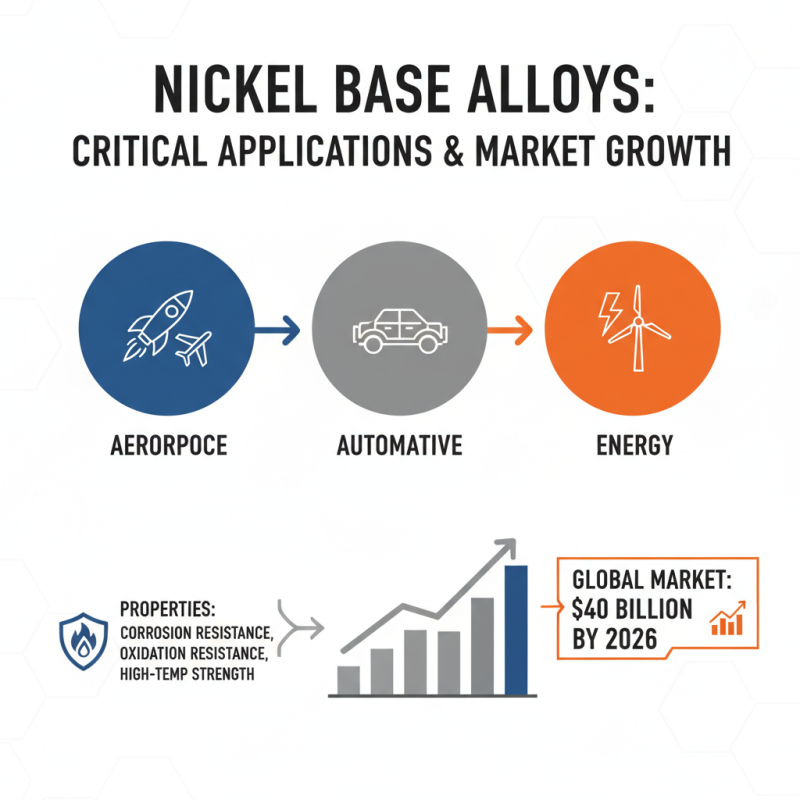
Nickel base alloys play a critical role in various industries due to their unique properties. They exhibit excellent resistance to corrosion, oxidation, and high temperatures. Reports indicate that the global nickel alloy market is projected to reach 40 billion USD by 2026. This growth is fueled by the aerospace, automotive, and energy sectors, where these alloys ensure reliability and performance.
In aerospace applications, nickel alloys are utilized in turbine engines and structural components. Their ability to withstand extreme conditions enhances safety and efficiency. In the oil and gas industry, nickel base alloys resist harsh environments, enabling longer equipment life. Data from industry sources shows that using these alloys can improve service life by up to 50%.
Despite their advantages, sourcing high-quality nickel base alloy castings can be challenging. Variations in composition and processing methods affect the material's final properties. Conducting thorough assessments of suppliers is essential to mitigating risks. Buyers must evaluate certifications and previous performance records to ensure reliability. This consideration is crucial for applications where failure isn't an option.
Key Properties of Nickel Base Alloys for Casting
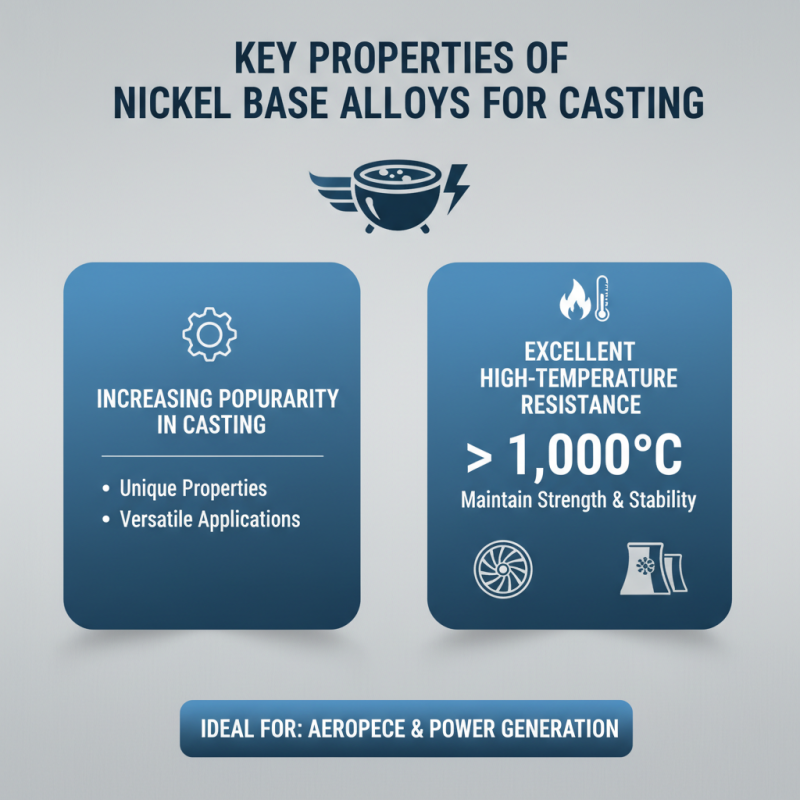
Nickel base alloys are increasingly popular in the casting industry due to their unique properties. One significant feature is their excellent resistance to high temperatures. According to industry reports, nickel-based alloys can maintain their strength and stability at temperatures exceeding 1,000 degrees Celsius. This makes them ideal for applications in aerospace and power generation sectors.
Another key property is corrosion resistance. Nickel alloys exhibit remarkable ability to withstand aggressive environments, including acidic and alkaline surroundings. Data from the Nickel Institute highlights that these alloys can endure corrosion, ensuring longer service life and reduced maintenance costs. However, challenges still exist. The casting process for these alloys can be complex, often requiring precise control of cooling rates and alloy compositions.
In terms of mechanical strength, nickel base alloys can achieve high tensile strength while remaining ductile. This combination allows for versatile applications but requires careful engineering to optimize performance. It’s essential to address these complexities in design and sourcing. Continuous research and development efforts are needed to enhance casting techniques and fully exploit the advantages of nickel base alloys in various industries.
Top Nickel Base Alloy Types for Global Consumers in 2026
As we look ahead to 2026, nickel base alloys continue to play a crucial role in various industries. These alloys offer outstanding resistance to corrosion and heat, making them invaluable in sectors like aerospace and chemical processing. Global consumers will seek specific alloy types tailored to their needs.
Alloy 625 stands out for its excellent fatigue strength. Its versatility makes it suitable for marine applications. Meanwhile, Alloy 718 is known for its remarkable weldability and strength at high temperatures, ideal for turbine components. Consumers must assess their working environment carefully when choosing an alloy type.
**Tips:** Always verify the certification of your chosen alloy. Understanding the specific requirements of your project will help you select the right material. Be cautious of suppliers promising low-priced options; quality should not be compromised for cost.
2026 Best Nickel Base Alloy Castings for Global Buyers
| Alloy Type |
Composition (% Ni) |
Key Properties |
Common Applications |
Market Demand (2026) |
| Inconel 718 |
52-56% |
High strength, oxidation resistant, weldable |
Aerospace, gas turbines, chemical processing |
High |
| Inconel 625 |
58-67% |
Excellent fatigue and thermal-fatigue strength |
Marine, chemical processing, power generation |
Medium |
| Monel 400 |
63% |
Corrosion resistant, good mechanical properties |
Marine environments, oil and gas industries |
Growing |
| Hastelloy C-276 |
57% |
Exceptional resistance to corrosion and heat |
Chemical processing, pollution control |
High |
| Incoloy 825 |
38-46% |
Good resistance to stress corrosion cracking |
Oil and gas, pollution control |
Stable |
Global Market Trends in Nickel Base Alloy Castings
The global market for nickel base alloy castings is evolving rapidly. Increasing demand in sectors like aerospace and energy drives innovation. These alloys offer excellent corrosion resistance and strength at high temperatures. As industries push for efficiency, the adoption of nickel base alloys becomes essential.
Tips: When choosing alloy castings, assess the specific requirements of your project. Understand the characteristics of various alloys to ensure the best fit. For example, look into factors such as temperature resistance and mechanical properties. Each application may require a different approach to alloy selection.
The supply chain for nickel base alloys faces challenges. Environmental regulations impact mining and production processes. Companies must adapt to maintain sustainability and meet compliance. Market fluctuations in nickel pricing also create uncertainty. Conducting thorough market research can help mitigate risks associated with these changes.
Tips: Stay updated on market trends. Engaging with industry experts can provide valuable insights. Don't overlook the importance of feedback from peers when selecting materials. Their experiences can guide you towards better decision-making.
Selection Criteria for Buyers of Nickel Base Alloy Castings
When choosing nickel base alloy castings, buyers need to evaluate several key criteria. The alloy's chemical composition plays a crucial role. Many studies indicate that specific formulations enhance resistance to corrosion and high-temperature stability. For instance, nickel content typically ranges between 50% to 70% for optimal performance in severe environments.
Another important factor is the casting process. Techniques such as investment casting and sand casting generate different material properties. Research shows that investment castings often exhibit superior surface finishes and dimensional accuracy. However, they can be more costly and time-consuming. Cost-effectiveness is another concern. A recent report indicated that 40% of buyers prioritize pricing and delivery times in their selection process.
Understanding the application is also essential. Industries like aerospace and nuclear require strict adherence to standards. Buyers must ensure compliance with certifications like ASTM or ASME, which guarantee reliability and performance. Reflecting on these criteria can be challenging. Buyers may face difficulties balancing quality and cost. Each choice comes with trade-offs that require careful consideration to meet their specific needs.