Top 10 Best Stainless Steel Castings Features and Applications?
In the evolving world of manufacturing, "Stainless Steel Castings" play a critical role in various industries. According to Mark Thompson, a well-known specialist in metal casting, "The right stainless steel casting can transform efficiency and durability." This statement emphasizes the importance of selecting the best casting for specific applications.
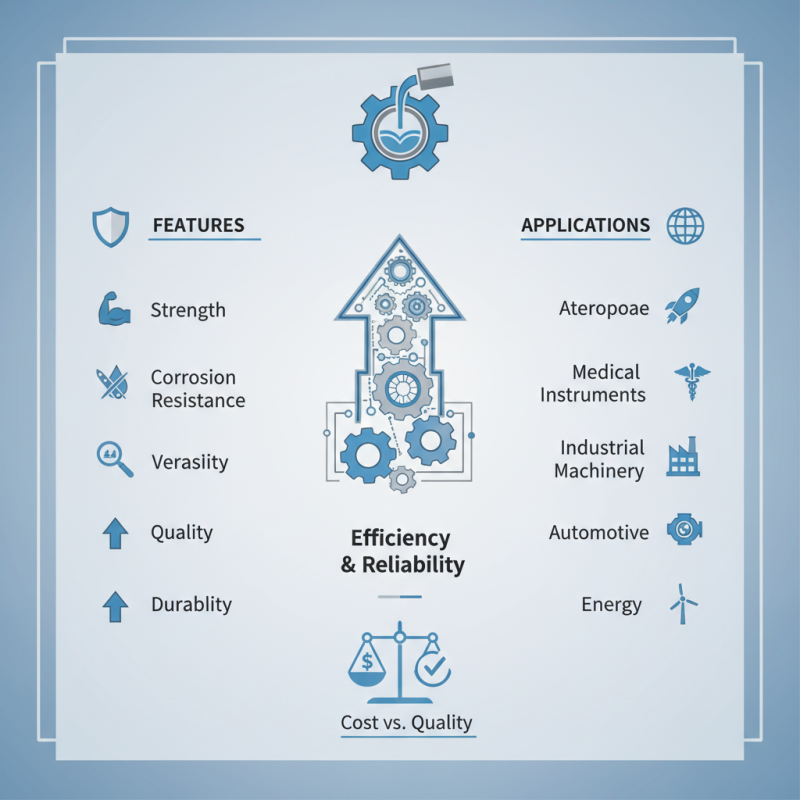
Stainless Steel Castings are praised for their strength, corrosion resistance, and versatility. Their applications range from aerospace to medical instruments. However, not all castings meet the required standards. It is essential to evaluate each casting's features closely. Improper choices can lead to costly failures and inefficiencies in production.
While many companies prioritize cost, they often overlook quality. Investing in top-notch Stainless Steel Castings is crucial for long-term success. As industries evolve, so do the demands for innovative and reliable castings. Companies must continuously adapt, reflecting on their processes and materials. Striking a balance between cost and quality should remain a priority.
Top Features of Stainless Steel Castings
Stainless steel castings have become vital in various industries due to their unique properties. They offer excellent corrosion resistance, which is crucial for components exposed to harsh environments. According to a recent industry report, about 60% of stainless steel castings are used in chemical processing and marine applications. This showcases their versatility and reliability.
Another key feature is their high strength-to-weight ratio. Stainless steel castings can withstand significant stress while remaining lightweight. This characteristic is particularly beneficial in the aerospace sector. The demand for lightweight materials is projected to grow by 30% over the next decade, indicating a shift toward more efficient designs. However, achieving uniformity in castings can be challenging and may result in defects if not managed properly.
The aesthetic appeal of stainless steel castings is undeniable. Their sleek surface finish makes them popular in architectural applications. However, this beauty comes with a price; achieving a perfect finish requires rigorous quality control. Industry experts note that around 15% of castings may need rework to meet finish standards. This reality reflects the balance of beauty and functionality in production processes.
Top 10 Best Stainless Steel Castings Features and Applications
Common Applications of Stainless Steel Castings
Stainless steel castings play a vital role in various industries. Their resistance to corrosion makes them ideal for use in harsh environments. Common applications include components for chemical processing, marine equipment, and food processing machinery. In fact, a recent industry report pointed out that stainless steel castings account for nearly 25% of the casting market, highlighting their significance.
In the automotive sector, these castings are utilized for exhaust systems and engine components. Their ability to withstand high temperatures and pressures is crucial. Additionally, in the energy sector, they are often found in turbine components. Despite their advantages, the production process can be complex. Issues such as porosity and dimensional control still pose challenges for manufacturers. Such imperfections can lead to costly reworks or failures in critical applications.
Moreover, the medical field relies on stainless steel castings for surgical instruments and equipment. These castings must meet stringent hygiene and durability standards. The precision required here is often hard to achieve. Consequently, manufacturers must constantly refine their techniques to ensure quality. Overall, while stainless steel castings represent a robust solution, ongoing improvements are necessary to meet the demanding needs of various industries.
Top 10 Best Stainless Steel Castings Features and Applications
| Feature |
Description |
Common Applications |
| Corrosion Resistance |
Stainless steel castings are highly resistant to rust and corrosion. |
Marine applications, outdoor equipment. |
| Heat Resistance |
Can withstand high temperatures without deteriorating. |
Industrial furnaces, heat exchangers. |
| Durability |
Long-lasting and strong, able to handle tough conditions. |
Construction, automotive parts. |
| Aesthetic Appeal |
Smooth, shiny surface that is visually appealing. |
Architectural elements, home appliances. |
| Versatility |
Can be cast into various shapes and sizes. |
Custom machinery, complex parts. |
| Non-reactive |
Does not react with food or chemicals. |
Food industry, pharmaceutical equipment. |
| Easy Maintenance |
Requires minimal maintenance compared to other materials. |
Handrails, kitchen equipment. |
| Recyclability |
100% recyclable without losing quality. |
Sustainable construction, eco-friendly projects. |
| Strength-to-weight Ratio |
High strength while remaining lightweight. |
Aerospace components, transportation. |
Advantages of Using Stainless Steel for Castings
Stainless steel has become a preferred choice for castings due to its numerous advantages. One key benefit is its high resistance to corrosion. This makes stainless steel ideal for environments that experience moisture. Components crafted from this material can withstand rain and humidity without deterioration. Additionally, its strength-to-weight ratio is favorable. This leads to durable products without unnecessary heaviness.
Another advantage is the aesthetic appeal of stainless steel. It has a shiny, clean appearance, making it suitable for applications where aesthetics matter. Industries like architecture and automotive design often favor stainless steel elements. However, despite these benefits, challenges exist. The casting process can be tricky. Achieving intricate designs requires skill and precision. Errors in this phase can lead to products that do not meet specifications.
Moreover, the cost of stainless steel is usually higher than other materials. While it offers longevity and performance, budget constraints can limit its use. Buyers must weigh the initial expense against potential long-term savings. Various industries still struggle with deciding if stainless steel is the right option for their casting needs. Understanding the balance between cost and performance is crucial.
Manufacturing Processes for Stainless Steel Castings
Stainless steel castings are vital in numerous industries. The manufacturing process begins with selecting high-quality stainless steel. This material provides durability and resistance to corrosion.
A common method is investment casting. It uses a wax pattern covered with a ceramic shell. Once it hardens, the wax is melted away. The molten stainless steel is poured in, creating precise shapes.
Another technique is sand casting. This involves creating a mold from sand and pouring metal into it. While effective, imperfections can occur in the surface finish.
Tips for successful casting: Ensure your mold is well-prepared. This reduces defects. Monitor the temperature of the metal closely. It can affect the final product's strength. Don't overlook post-processing steps. They can enhance the quality significantly.
These processes can be complex. Learning and refining techniques takes time. Mistakes happen and should be seen as learning opportunities. However, with careful attention and practice, quality castings are achievable. The right approach is essential for structural integrity and performance.
Market Trends in Stainless Steel Casting Industry
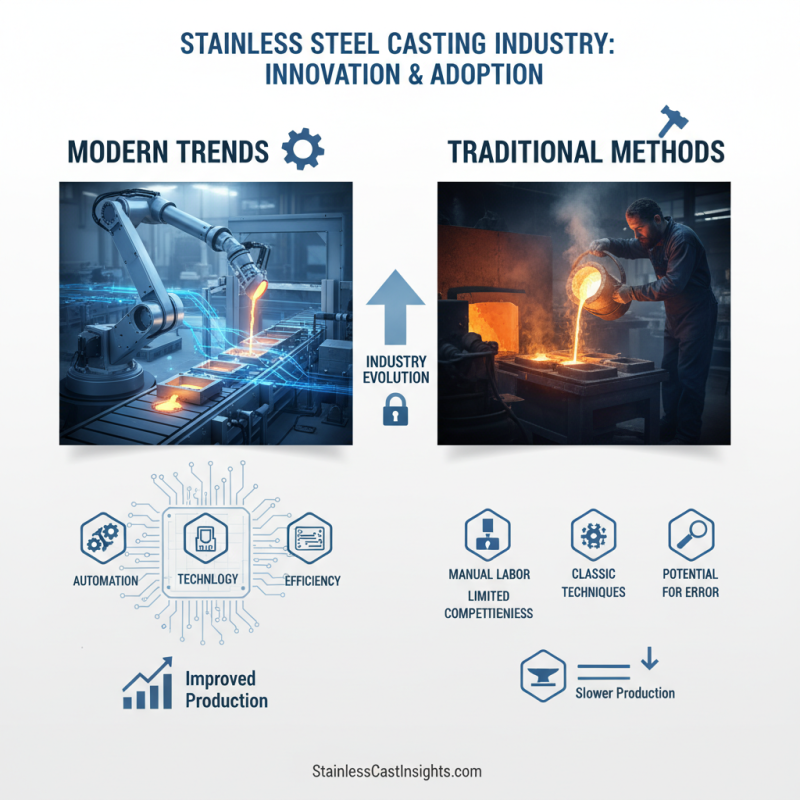
The stainless steel casting industry is currently witnessing exciting trends. Many manufacturers are adopting advanced technologies to improve production efficiency. Automation plays a significant role. It helps reduce human error and enhances product quality. However, not all facilities have embraced these changes. Some still rely on traditional methods, which might limit their competitiveness.
Sustainability is another key trend. Many companies are focusing on eco-friendly practices. This includes using recyclable materials in their processes. Yet, challenges remain. Transitioning to greener methods may demand significant investment and time. As companies strive to meet growing regulatory demands, the pressure to adapt increases.
Market demands are shifting too. There is a rise in demand for custom stainless steel castings. Industries such as automotive and aerospace require specialized components. While this presents opportunities, it also strains resources. Meeting these unique specifications often leads to delays and increased costs. Some manufacturers struggle with this need for customization, creating a gap in supply and demand.