Why Choose White Iron Castings for Your Industry Needs?
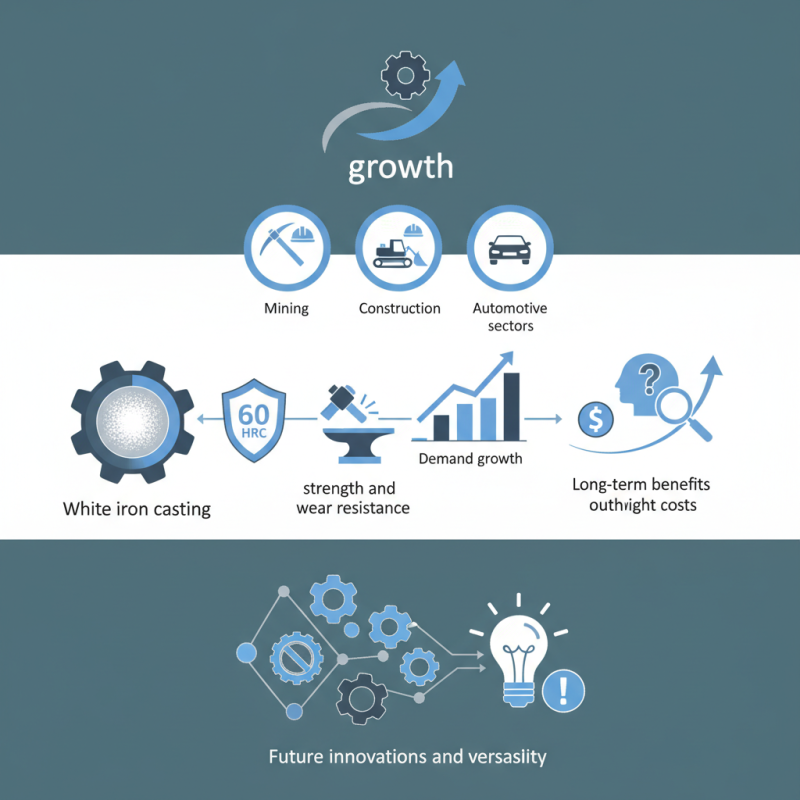
White Iron Castings have gained widespread recognition in various industries due to their strength and wear resistance. According to a recent industry report by Market Research Future, the demand for white iron castings is projected to grow significantly, driven by applications in mining, construction, and automotive sectors. With a hardness that can reach up to 60 HRC, these castings are ideal for tackling the toughest conditions.
Expert John Smith, a prominent figure in the metallurgy field, emphasizes this trend. He stated, "White Iron Castings offer unparalleled durability and are essential for industries seeking longevity in their products." However, there are challenges in selecting the right type of casting. Some businesses overlook the significance of precise material choices, which can lead to costly mistakes.
Investing in White Iron Castings may initially seem expensive, yet their long-term benefits outweigh the costs. Many companies, however, fail to recognize this value. Careful consideration of the specific requirements can ensure optimal results. As industries continue to evolve, the versatility of white iron castings will likely play a crucial role in shaping future innovations.
Benefits of White Iron Castings for Industrial Applications
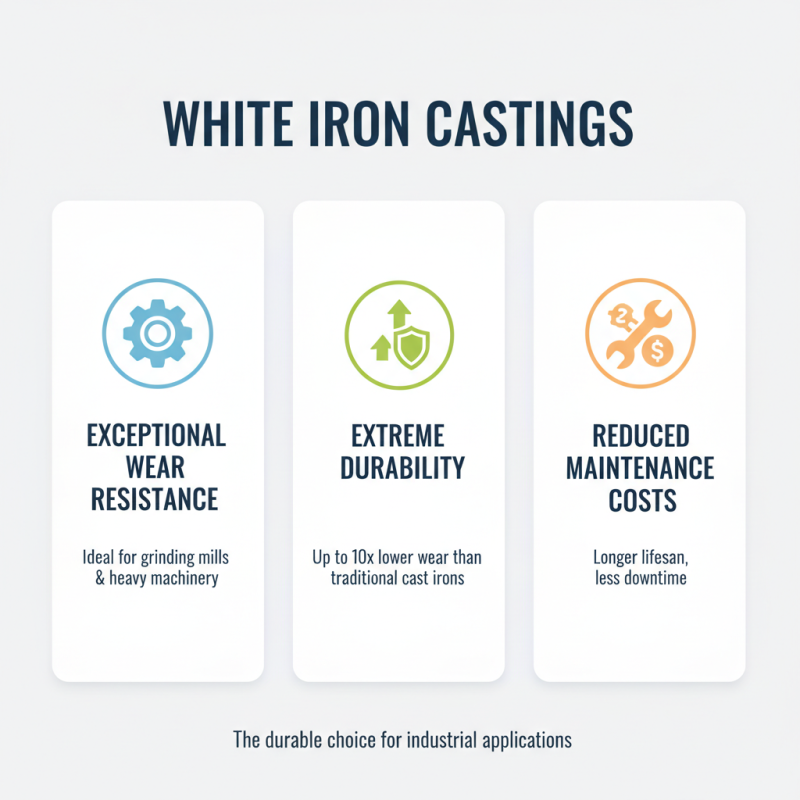
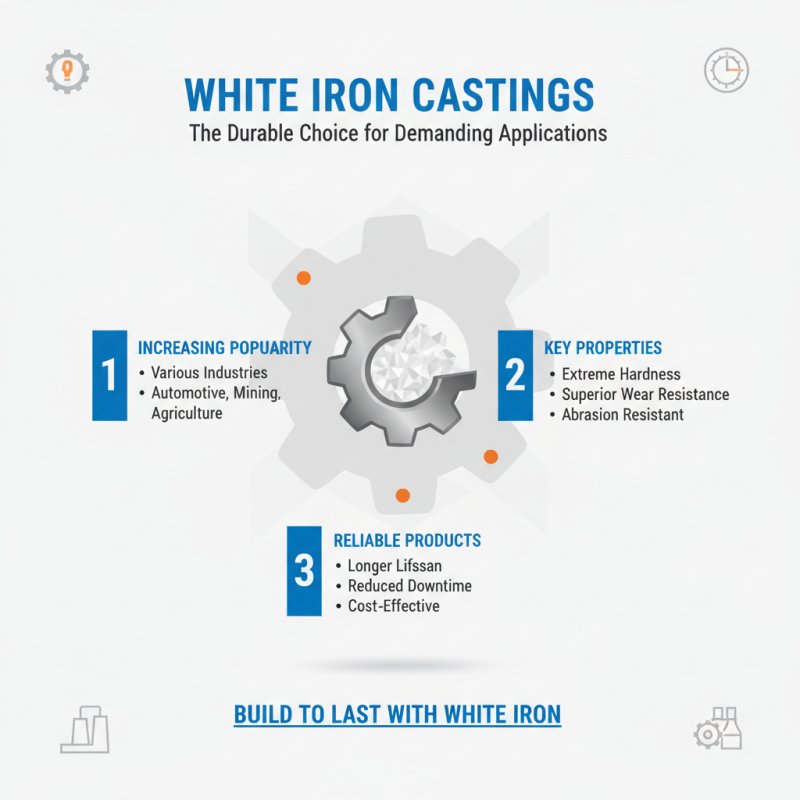
White iron castings have gained popularity in various industries due to their unique properties. These castings offer exceptional wear resistance, making them ideal for applications like grinding mills and heavy machinery. In studies, wear rates for white iron castings can be up to ten times lower than traditional cast irons. This durability translates into lower maintenance costs over time.
One of the key benefits of white iron castings is their excellent hardness. The material achieves a hardness range of 450 to 700 Brinell, which allows it to withstand harsh conditions. This hardness is particularly beneficial in applications involving abrasive materials, such as mining and quarrying. However, the brittleness of white iron can also lead to challenges. Care must be taken to avoid sudden impacts that could cause fractures.
Tips: When choosing white iron castings, consider the specific requirements of your application. Evaluate the expected wear conditions and the potential for impact. Consulting with a knowledgeable engineer can ensure that your selection is appropriate. Keep in mind that while white iron castings excel in many areas, it's essential to understand their limitations to avoid costly mistakes.
Comparative Analysis: White Iron vs. Other Metal Castings
When selecting materials for industrial applications, the choice of cast iron can significantly influence performance. White iron castings are renowned for their hardness and wear resistance. They often outperform other metals in abrasive conditions. According to the American Foundry Society, white iron exhibits a hardness of about 500 Brinell. This makes it useful for applications such as grinding balls and liners.
In contrast, ductile iron and gray iron have higher tensile strength but lower hardness. Ductile iron achieves a tensile strength range from 60,000 to 120,000 psi while offering more ductility. However, it may not endure severe wear like white iron. In environments where abrasion is a major concern, white iron’s superior wear resistance becomes essential. Interestingly, some studies suggest that using white iron can lead to longer service life and reduced downtime in heavy-duty machinery.
Cost considerations also play a role. While white iron can be more expensive to produce, its longevity might balance out the initial investment. Some industry reports indicate that companies have reduced maintenance costs by up to 30% when switching to white iron castings. Such numbers highlight the trade-offs between upfront material costs and long-term operational efficiency. The decision should reflect the specific needs of each application, exposing the nuances in material selection.
Why Choose White Iron Castings for Your Industry Needs?
This bar chart compares the tensile strength of different casting materials, highlighting white iron's superior strength. As shown, white iron castings provide significant advantages over gray iron and aluminum, making them a preferred choice for demanding industrial applications.
Key Properties of White Iron That Make It Ideal for Manufacturing
White iron castings are becoming increasingly popular in various industries due to their unique properties. High wear resistance is one of its standout features. According to industry data, white iron can resist abrasion up to three times better than standard carbon steel. This makes it a prime choice in applications like mining equipment and rock crushers. Its hardness ensures longevity, which reduces replacement costs.
Additionally, white iron demonstrates excellent impact strength when hardened correctly. The microstructure consists of a cementite matrix that provides outstanding toughness. For instance, parts made from white iron can endure severe working conditions without deforming. Corrosion resistance is another valuable aspect, allowing for use in harsh environments. However, handling white iron requires careful consideration of its brittleness during casting.
The casting process for white iron is critical. If not done properly, it can lead to defects like porosity or uneven density. These flaws can compromise performance. Future advancements in casting techniques may help mitigate these issues. Optimizing the manufacturing process could ultimately improve the reliability of white iron castings.
Factors to Consider When Selecting White Iron Castings for Projects
When selecting white iron castings for industrial applications, several factors come into play. White iron castings are known for their hardness and resistance to wear. According to a recent industry report, these materials can withstand abrasions more effectively than other cast types. This quality makes them ideal for heavy-duty applications.
However, while white iron offers superior hardness, it is brittle. This means that careful consideration should be given to the intended use. Projects requiring high shock resistance may not be suitable. It's essential to balance the casting's hardness with the potential for breakage. The fatigue strength of white iron castings typically stands at around 200 MPa, according to industry data, which may influence your decision.
In addition, the method of production impacts quality. Sand casting, for example, is widely used, but it may not always deliver consistent results. Variations in temperature and sand composition can lead to defects. Evaluating the casting method's efficiency and reliability is crucial for ensuring project longevity. It’s worth noting that while white iron castings can reduce maintenance costs, the initial investment may be higher than more conventional materials. This is an important consideration for budget-sensitive projects.
Why Choose White Iron Castings for Your Industry Needs?
| Factor |
Description |
Application |
| High Wear Resistance |
White iron has a high hardness level, making it excellent for applications involving abrasion. |
Mining Equipment, Construction Machinery |
| Corrosion Resistance |
Certain formulations of white iron provide improved resistance to corrosion. |
Pumps, Valves |
| Good Casting Properties |
White iron can be cast into intricate shapes and sizes, offering design flexibility. |
Custom Industrial Parts |
| Mechanical Strength |
Provides high tensile and compressive strength, suitable for heavy-duty applications. |
Heavy Machinery, Railways |
| Dimensional Stability |
White iron maintains its dimensions during thermal and mechanical stresses. |
Precision Components |