How to Choose Nickel Base Alloy Castings for Your Project?
Choosing the right Nickel Base Alloy Castings is essential for project success. These materials provide excellent strength and resistance to heat and corrosion. Understanding their properties is crucial.
Projects often require specific performance characteristics. Nickel Base Alloy Castings come in various grades and sizes. Selecting the correct casting depends on the application and operating environment. It's not just about choosing a material; it's about understanding how it performs under stress.
Mistakes in this selection process can lead to costly failures. Avoid simply relying on specifications. Consider real-world applications and demands. Reflect on past experiences to identify potential pitfalls. A thoughtful approach will lead to better outcomes.
Understanding Nickel Base Alloys: Composition and Properties
Nickel base alloys are essential in many industrial applications. These alloys consist primarily of nickel, along with other elements like chromium and molybdenum. Their unique composition gives them excellent corrosion resistance and high-temperature strength. According to the International Nickel Study Group, nickel base alloys account for around 25% of the global super alloy market, reflecting their critical role in industries like aerospace and chemical processing.
The properties of nickel base alloys vary significantly. For instance, the addition of chromium enhances oxidation resistance, while molybdenum improves tensile strength. The temperature limit for these alloys often exceeds 1,000°C, making them ideal for extreme conditions. However, sourcing these materials can be tricky. The supply chain can be inconsistent, and prices fluctuate. Recent market reports indicate that nickel prices have surged by over 15% in the past year, impacting project budgets.
Engineers should weigh the benefits against potential challenges. While nickel base alloys offer high performance, they require careful selection based on project specifications. Mistakes in material choice can lead to severe consequences. Testing and experience are key. Ultimately, understanding the composition and properties of nickel base alloys is vital for making informed decisions.
Identifying Project Requirements: Application and Environmental Factors
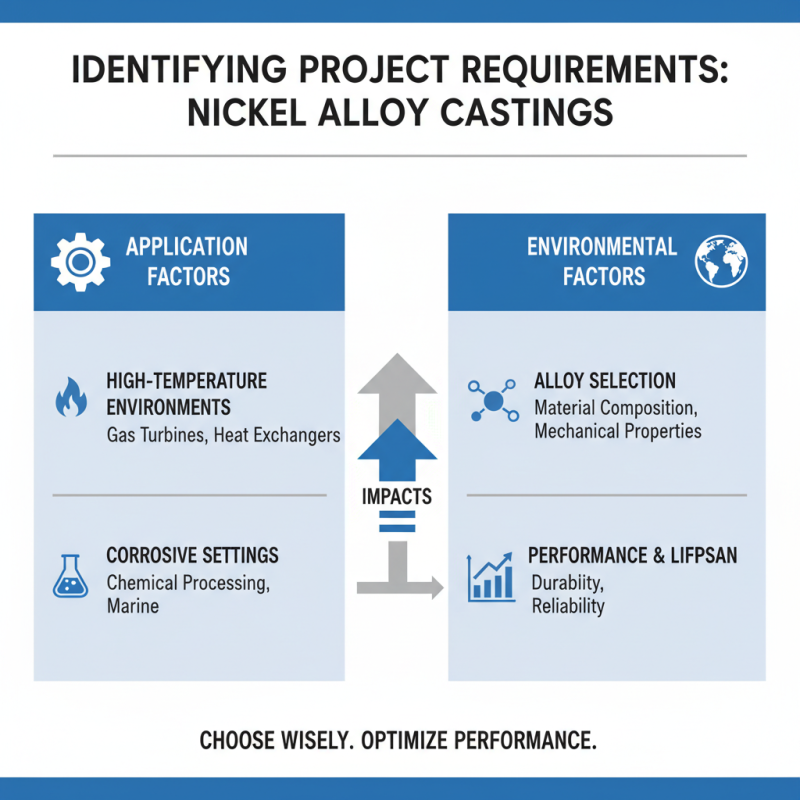
When selecting nickel base alloy castings, understanding the project requirements is crucial. Consider the application carefully. Is it for high-temperature environments or corrosive settings? Each factor will impact your choice of alloy. The right selection can enhance the performance and lifespan of your components.
Next, evaluate the environmental conditions your project will face. Will it encounter humidity, saltwater, or extreme heat? These conditions can affect the material's durability. Testing under real conditions can lead to better decisions. Sometimes, opting for a less commonly used alloy may yield surprising benefits.
Always question your decisions. Have you thoroughly assessed compatibility with other materials? Ignoring this may lead to unforeseen challenges. Seek feedback from peers in the industry. They may highlight aspects you overlooked. Emphasizing careful considerations can lead to more satisfactory results in your projects.
Evaluating Casting Methods for Nickel Base Alloys
When working with nickel base alloys, selecting the right casting method is crucial. Each method has its pros and cons. The common techniques include sand casting, investment casting, and die casting. Each one brings unique characteristics to the final product.
Sand casting is versatile and widely used. It can accommodate larger parts and is cost-effective for low volume production. However, the surface finish may not be as smooth. This could lead to additional machining, which adds time and cost.
Investment casting offers superior precision and surface finish. It is great for complex geometries and tight tolerances. Yet, the initial tooling cost can be high. This method is ideal for smaller parts but may not be efficient for large components.
**Tips:**
Consider the project's budget and timeline. This will guide you on which method to choose. Analyze your design carefully. Understand the trade-offs between quality and cost, and choose accordingly. Always leave room for refinements. Mistakes can lead to learning opportunities.
Using the proper casting method impacts the overall performance of your project. Be aware of potential flaws and the need for revisions. Knowing your specific requirements will help avoid common pitfalls.
How to Choose Nickel Base Alloy Castings for Your Project? - Evaluating Casting Methods for Nickel Base Alloys
| Casting Method |
Benefits |
Limitations |
Recommended Applications |
| Sand Casting |
Cost-effective for large parts |
Surface finish can be rough |
Heavy machinery, marine components |
| Investment Casting |
High precision and excellent surface finish |
Higher cost, longer lead times |
Aerospace, medical devices |
| Die Casting |
Good dimensional accuracy |
Limited to lower melting point alloys |
Automotive parts, small housings |
| Continuous Casting |
Efficient mass production |
Complex setup required |
Pipes, bars, and rods |
| Precision Casting |
Fine details and complex shapes |
More expensive than other methods |
Jewelry, detailed components |
Comparing Cost and Performance of Different Alloy Options
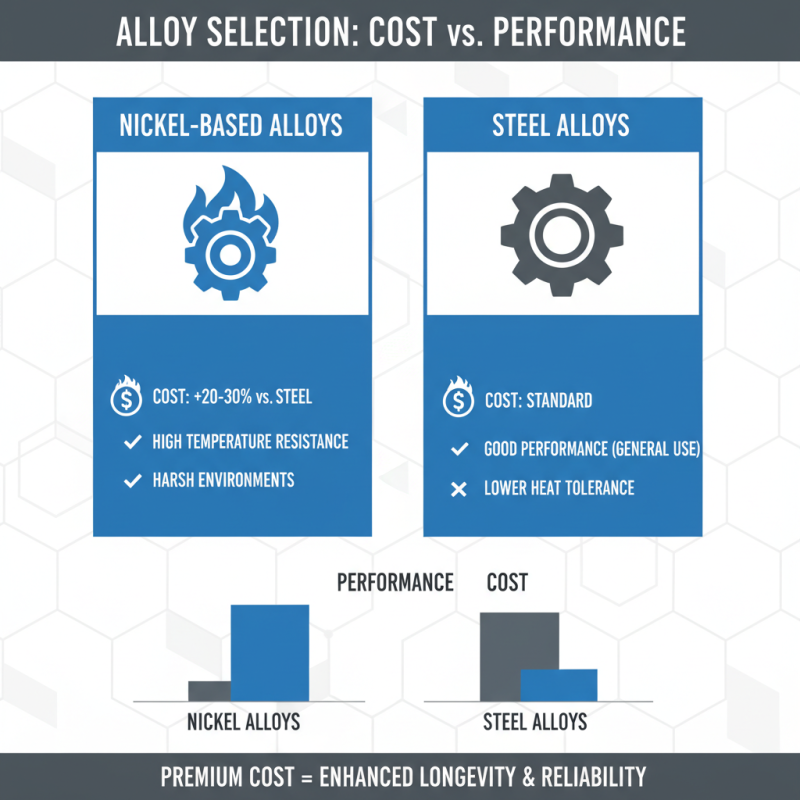
When selecting nickel base alloy castings, cost and performance are key factors. The choice of alloy can significantly affect the longevity and reliability of your project. Recent data shows that nickel alloys can resist high temperatures better than steel but may cost 20-30% more. This premium can lead to better performance, particularly in harsh environments.
One point to consider is processing costs. Casting nickel alloys often requires specialized techniques. Common methods like sand casting can yield lower costs but may not provide the precision needed for high-performance parts. A study from an industry report indicates that precision casting can enhance quality but can increase costs significantly.
Tips: Evaluate your project's specific requirements. Consider whether you need high strength, corrosion resistance, or heat resistance. Each alloy choice offers different advantages and trade-offs. Balancing performance with budget constraints is essential.
Don't forget to assess the lifecycle costs. Initially, a cheaper option may seem appealing. However, if it fails early, replacement costs can skyrocket. Thus, a more expensive alloy might ultimately save money in the long run. Always think critically about your decision and its implications.
Sourcing Reliable Suppliers for Nickel Base Alloy Castings
Finding reliable suppliers for nickel base alloy castings can be challenging. Many factors come into play when making your choice. Start by assessing the supplier’s experience in the industry. Years of operation often reflect reliability and expertise. Ask for references from previous clients. This can give you insight into their quality.
Communication is crucial. Does the supplier respond quickly? Clear communication indicates professionalism. Look for suppliers who are open to questions. Discuss specifics about the alloy's properties. You may also want to check their production process. Understanding their methods can reveal their commitment to quality.
Quality certifications can be helpful. However, don’t rely solely on certifications. Investigate further into their production standards. It’s essential to compare multiple options. Make selections based on more than just price. Trust your instincts. If something feels off, pay attention. Choosing a supplier is not just a purchase; it’s a partnership.