
Choosing the right Nickel Base Alloy supplier in 2026 requires more than comparing prices. Buyers must examine technical capability, material traceability, production capacity, and long-term reliability. A polished website proves very little. Factory evidence matters more.
Experienced suppliers should provide heat numbers, chemical composition reports, mechanical test results, and clear quality-control records. These documents should match the delivered material, not a generic sample. Confirm whether the supplier understands demanding applications, including aerospace components, chemical processing equipment, marine systems, and high-temperature turbines. Ask about alloy grades, melting methods, forging limits, dimensional tolerances, and inspection equipment. Small details often expose large weaknesses.
Supplier audits can reveal practical conditions. Look for organized storage, calibrated instruments, clean identification tags, and trained inspection staff. Request references from customers with similar requirements. Independent testing may also be worthwhile for critical orders. It adds cost, but one failed batch can cost much more. Do not trust every certificate blindly.
Commercial factors deserve equal attention. Compare minimum order quantities, realistic lead times, packaging quality, payment terms, and after-sales support. A low quotation may hide weak traceability or unstable delivery. In 2026, supply-chain transparency and responsible sourcing will influence purchasing decisions more strongly. However, forecasts are not guarantees. Market conditions can change quickly.
The best supplier is not always the largest one. It is the partner that communicates clearly, admits limitations, and corrects mistakes quickly. Evaluate production records, not promises. Ask difficult questions. Then document the decision carefully.

In 2026, choosing a nickel base alloy supplier starts with a precise grade definition. For Alloy 625, request chemistry showing nickel at 58% minimum, not a vague “nickel alloy” statement. Alloy 718 typically contains 50–55% nickel, with controlled additions of chromium, iron, molybdenum, and niobium. Numbers matter. These differences influence corrosion resistance, strength, welding behavior, and service temperature.
Ask suppliers to provide complete mill test certificates for every heat. Match the heat number to the material marking, purchase order, and inspection report. Keep it traceable.
During supplier reviews, examine laboratory equipment, calibration records, and heat-treatment controls. A polished certificate is useful, but it is not proof by itself. Request tensile, hardness, and, when relevant, corrosion testing under your actual service conditions.
Do not confuse a nominal range with a guaranteed result. I have seen purchasing teams select 718 for strength, then overlook its required aging treatment. That mistake can become expensive. Compare the supplier’s processing records, delivery consistency, packaging, and technical response time. Ask how they handle nonconforming material. Their answer reveals more than a sales brochure. An independent laboratory check may be sensible for critical lots, although it adds cost and time. Suppliers should explain those trade-offs clearly.
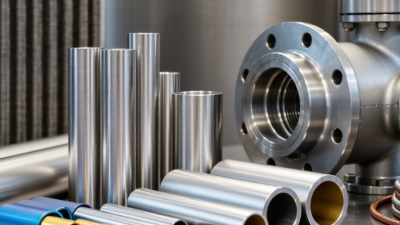
Choosing a nickel base alloy supplier in 2026 should begin with documents, not polished sales claims.
Ask whether the proposed seamless pipe or tube meets ASTM B167, including the correct alloy grade and product form. For forgings, check ASTM B564 and confirm dimensions, heat treatment, and testing requirements. The standard number alone proves little.
Not enough.
Review ASME requirements against your design code, service temperature, pressure, and fabrication method. A supplier should explain which ASME material specification or Section requirement applies, rather than copying a generic statement. Request ISO 9001 certification, then verify its scope, certificate validity, and issuing body. ISO 9001 shows controlled processes, but it does not automatically prove alloy quality.
That distinction matters.
Read each MTC like a production record. It should connect the heat number to chemistry, tensile results, yield strength, elongation, hardness, heat treatment, and applicable tests. Compare the MTC with purchase requirements and inspect markings on the actual bundle or forging. In practical audits, I also request calibration records, nonconformance history, and traceability samples.
A certificate can look complete while one transfer record is missing.
That is an uncomfortable weakness. I would not ignore it. Before approval, request a redacted sample MTC and resolve every mismatch in writing.
Choosing a nickel-base alloy supplier in 2026 starts with the test certificate, not the sales brochure. For Alloy 625, check whether the offered product meets at least 827 MPa tensile strength and 30% elongation. These values commonly appear in ASTM specifications for selected product forms, including plate and bar. Product form matters.
Ask for heat numbers, solution-treatment records, specimen direction, test temperature, and the exact standard edition. A reliable certificate should connect the results to one identifiable melt. Request an independent laboratory report when the order is critical. Small details matter here. A certificate can still look convincing and be incomplete.
Market conditions also deserve attention. The U.S. Geological Survey’s Mineral Commodity Summaries 2025 estimated global mined nickel production at about 3.7 million metric tons in 2024. The International Energy Agency’s Global Critical Minerals Outlook 2024 also identified nickel as important for clean-energy supply chains. This environment can encourage substitutions, split heats, or rushed documentation. Do not accept them casually. Compare the reported chemistry with nickel, chromium, molybdenum, and niobium ranges required by the applicable specification. Then review hardness, corrosion testing, and traceability. One weakness remains: tensile data alone cannot predict service performance. A supplier may meet 827 MPa yet provide poor surface condition or inconsistent weldability. That gap deserves a technical discussion before purchase.
Choosing nickel base alloy suppliers in 2026 requires an operational audit, not a polished brochure. The U.S. Geological Survey reported about 3.7 million metric tons of global nickel mine production in 2024. Indonesia supplied more than half of that volume. This concentration can affect availability, price exposure, and shipping schedules.
Ask each supplier to prove its practical capacity. Request recent production records, minimum lot sizes, furnace availability, and monthly allocation limits. A supplier may quote ten tonnes, yet only release two tonnes per shipment. That difference matters. For critical components, compare confirmed lead time with promised lead time. Add customs clearance, testing, and possible rework. A 12-week estimate can become 18 weeks.
Traceability should reach the heat number, chemical analysis, melting route, and inspection record. Verify certificates against independent laboratory results when the application is safety-sensitive. The International Energy Agency expects clean-energy nickel demand to rise sharply by 2030, roughly doubling from 2023 levels in its stated-policies scenario. Demand pressure may therefore reach specialty alloys indirectly. I would also examine backup melts and raw-material allocation. One supplier can look reliable until its largest customer receives priority. That risk is easy to miss. A useful audit includes sample orders, not only factory visits. Review ten recent lots, measure actual lead-time variance, and check whether documentation arrived before shipment. Imperfect records deserve questions, not automatic rejection.
| Anonymous Supplier Profile | Typical Nickel Alloy Scope | Standard Lot Size | Standard Lead Time | Expedited Lead Time | Monthly Nameplate Capacity | Material Traceability | Inspection Documentation | 2026 Demand Exposure | Audit Priority |
|---|---|---|---|---|---|---|---|---|---|
| Profile A | Nickel-chromium alloys, nickel-iron-chromium alloys, heat-resistant sheet and plate | 500–2,000 kg | 8–12 weeks | 5–7 weeks | 80–150 metric tons | Heat number, cast number, processing route, and final product marking | EN 10204 3.1 certificate, chemical analysis, mechanical test results, dimensional report | Medium–High | Verify capacity reservations |
| Profile B | Nickel-chromium-molybdenum alloys for corrosion-resistant plate, bar, pipe, and fittings | 1,000–5,000 kg | 10–16 weeks | 6–9 weeks | 120–250 metric tons | Heat and batch traceability retained through melting, forging, rolling, and testing | EN 10204 3.1 or 3.2 available; PMI, tensile, hardness, corrosion, and ultrasonic testing by specification | High | Confirm mill-slot allocation |
| Profile C | Nickel-based superalloy bar, billet, forgings, and precision-machined components | 100–750 kg | 14–22 weeks | 9–14 weeks | 35–90 metric tons | Full heat, lot, furnace cycle, forging reduction, and machining traceability | Material certificate, heat-treatment chart, NDT report, dimensional inspection, and conformity statement | High | Secure forecast and tooling slots |
| Profile D | Nickel alloy welding wire, strip, filler metal, and additive-manufacturing powder | 25–500 kg | 6–10 weeks | 4–6 weeks | 20–60 metric tons | Lot number, powder or wire batch, particle-size or diameter data, and packaging record | Chemical analysis, tensile data, particle-size distribution where applicable, and batch conformity certificate | Medium | Check batch consistency |
| Profile E | Small-batch precision tubing, capillary products, and laboratory-grade nickel alloy components | 10–250 kg | 8–14 weeks | 5–8 weeks | 10–35 metric tons | Individual lot, tube length, heat-treatment batch, and final inspection record | Certificate of conformity, dimensional report, leak test, surface inspection, and material certificate | Medium | Validate minimum-order flexibility |
| 2026 audit rule: Require written capacity confirmation, a rolling 12-month forecast review, documented heat-level traceability, agreed lead-time milestones, and objective evidence for every inspection document before approving a nickel base alloy supplier. | |||||||||
Rank Total Value: Price, Scrap Risk, ESG Data, and Dual-Source Resilience
Choosing a nickel base alloy supplier requires more than comparing quotations. In my sourcing reviews, the cheapest offer often carried hidden costs. Unstable chemistry increased machining rejects, while inconsistent surface quality delayed production. Ask for recent mill certificates, heat traceability, dimensional records, and verified test methods. Request samples from several production heats. One successful sample proves little.
Scrap risk deserves a financial model. Estimate yield loss, rework hours, inspection time, and replacement freight. A supplier with a slightly higher price may deliver a lower cost per accepted kilogram. Include lead-time variation and minimum order quantities. Keep the calculation visible. My earlier reviews underestimated setup losses. That mistake changed the ranking.
ESG evidence should be specific and auditable. Review energy data, recycled content, emissions boundaries, water controls, and corrective-action records. Avoid broad promises without dated documents. Data gaps are not automatic disqualifiers, but they need a clear improvement plan. Dual-source resilience also matters. Qualify a second supplier before disruption occurs, including technical approval, sample testing, and capacity checks. Compare their geographic exposure, raw-material access, and communication speed. Two approved sources are better than two names on a spreadsheet. Recheck them annually. Conditions change.