Why Are Casting Fittings Essential for Global Procurement?
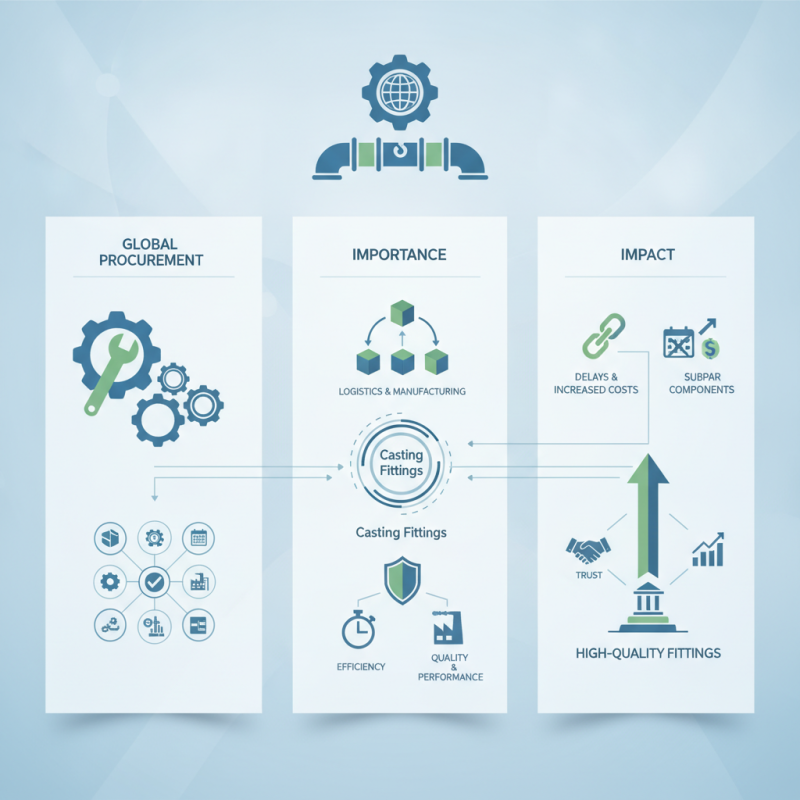
In the global procurement landscape, the importance of Casting Fittings cannot be overstated. As noted by industry expert Dr. John Harper, “Casting Fittings are the backbone of efficient logistics and manufacturing processes.” These components play a crucial role in connecting different systems and ensuring seamless operations.
Understanding the essentials of Casting Fittings can significantly enhance supply chain efficiency. Companies rely on these fittings to maintain quality and performance standards. Poorly crafted fittings can lead to serious consequences, such as project delays and increased costs.
The demand for high-quality Casting Fittings is evident in various sectors, from construction to machinery. Yet, many businesses still overlook the implications of sourcing subpar components. An investment in reliable Casting Fittings is an investment in future success, fostering trust and durability in global supply chains.
The Role of Casting Fittings in Supply Chain Management
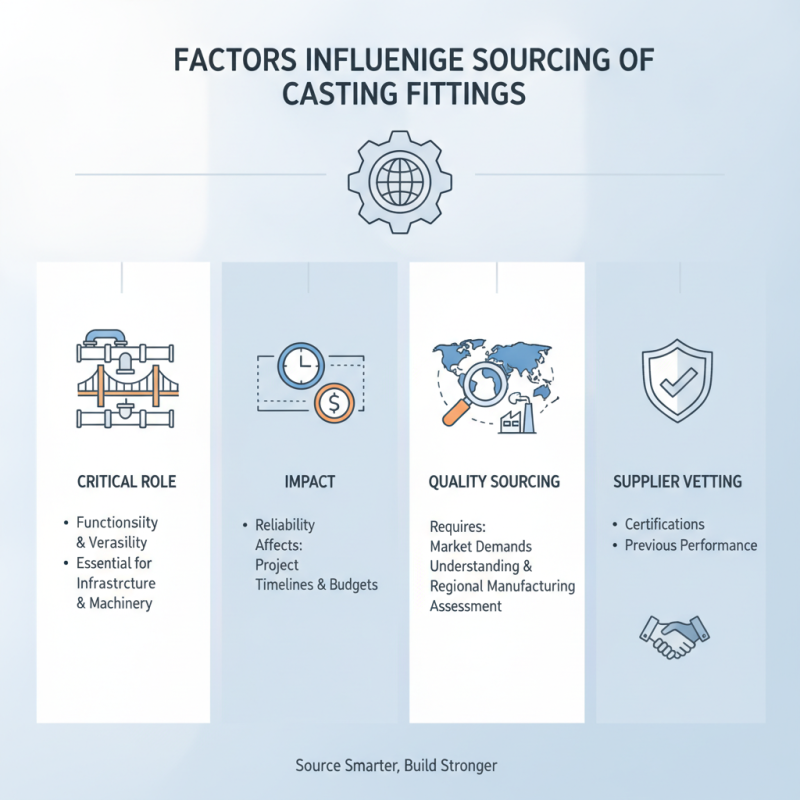
Casting fittings play a critical role in supply chain management. They ensure the seamless connection of various components, enhancing operational efficiency. These fittings act as essential junctions, linking raw materials and finished products. In a global procurement context, this connectivity is vital for maintaining production timelines and fulfilling customer demands.
A well-integrated supply chain requires reliable casting fittings. Delays in one component can halt an entire operation. If these fittings are subpar, it compromises the structural integrity of products. This could lead to recalls or expensive repairs later. Companies must evaluate their suppliers carefully, ensuring the quality of casting fittings remains top-notch.
Quality control is often overlooked in the procurement process. This can lead to serious oversight. Poor decisions in sourcing can result in financial losses and customer dissatisfaction. Addressing these challenges requires ongoing assessment and adaptation in supply chain strategies. By focusing on casting fittings, businesses can strengthen their supply chain resilience and improve overall performance.
Key Benefits of Using Casting Fittings in Global Procurement
Casting fittings play a pivotal role in global procurement, offering several advantages that enhance operational efficiency. According to a report by Research and Markets, the global casting market is projected to reach $290 billion by 2026, highlighting the increasing reliance on these components. Casting fittings provide strong, durable connections in various applications, from automotive to construction, ensuring long-lasting integrity.
One key benefit is the versatility they offer. Casting fittings can adapt to different materials and designs, making them suitable for a range of industries. This adaptability can lead to cost savings. A study from McKinsey indicates that companies can reduce procurement costs by up to 15% through optimized sourcing strategies. However, relying solely on casting fittings may pose risks in terms of compatibility and quality. Regular testing and audits are essential.
Tip: Regularly assess your supplier's quality control processes. This ensures that you are using reliable casting fittings.
Another advantage is their ability to simplify the supply chain. By using standard casting fittings, companies can minimize the number of suppliers needed. This streamlining can lead to faster deliveries. Nonetheless, the push for efficiency must not compromise quality. Manufacturers should balance speed with stringent quality standards.
Tip: Diversify suppliers to ensure stability in your supply chain. This can mitigate risks associated with single-source dependencies.
Challenges in the Global Procurement of Casting Fittings
Global procurement of casting fittings is fraught with challenges that can impact efficiency and cost. One significant issue is the varying quality standards across regions. For example, a supplier in one country may not meet the stringent requirements found in another. This discrepancy often necessitates extensive testing and evaluation, creating delays.
Logistics also plays a critical role. Transportation methods can vary widely, affecting delivery times and costs. Some suppliers may be located far from production sites, leading to increased shipping expenses. Even small delays can cascade into larger problems, impacting project timelines.
Furthermore, fluctuating currency exchange rates can affect pricing and budget planning. Procurement professionals must stay abreast of geopolitical developments that may influence trade regulations. This aspect introduces another layer of complexity. Developing strong relationships with reliable suppliers is essential but can take time and investment. In navigating these challenges, organizations must continuously evaluate their strategies to enhance procurement processes.
Challenges in Global Procurement of Casting Fittings
Future Trends in Casting Fittings and Global Procurement Practices
The future of casting fittings in global procurement is evolving rapidly. Recent data from the Global Casting Report indicates that the casting fittings market is projected to grow at a CAGR of 6.5% through 2027. This growth is driven by the increasing demand for high-quality materials in various industries, including automotive and construction.
Sustainability trends are prominent in the casting industry. Many organizations are prioritizing eco-friendly practices in their procurement strategies. For instance, the shift toward recycling metal scraps has become a crucial focus. Reports show that recycled metal can reduce greenhouse gas emissions by up to 70%. Yet, challenges remain. Not all manufacturers have adopted these practices effectively.
In terms of technology, advancements in 3D printing and automation are reshaping the landscape. These innovations enhance precision and reduce waste. However, the integration process can be slow. Firms need to balance investing in technology with maintaining existing supply chains. This uncertainty can lead to inefficient procurement practices. Addressing these imperfections is essential for future success.