
Nickel Alloy materials support demanding applications where heat, corrosion, pressure, or repeated loading can defeat ordinary steel. The term covers many engineered families, including commercially pure nickel, nickel-copper, nickel-chromium, nickel-iron-chromium, and precipitation-hardened grades. Each family behaves differently. Inconel 625 resists chloride environments and high temperatures, while Monel 400 performs well in seawater and hydrofluoric acid service. Hastelloy C-276 is often selected for severe chemical processing conditions.
The market context explains their importance. The U.S. Geological Survey’s Mineral Commodity Summaries 2025 estimates worldwide mined nickel production at approximately 3.7 million metric tons in 2024. That figure describes primary nickel, not finished alloy output. The International Energy Agency’s Global Critical Minerals Outlook 2024 also identifies nickel as an important material for batteries, stainless steel, and clean-energy supply chains. Demand is changing quickly. However, battery demand should not obscure nickel alloy’s long industrial history.
This article examines common Nickel Alloy types, grades, properties, and uses. It connects UNS designations, ASTM specifications, and practical selection factors. Temperature, weldability, corrosion chemistry, and fabrication costs all matter. A higher nickel percentage does not automatically mean better performance. That assumption needs correction.
The details matter.
Readers will see why aerospace combustors, offshore piping, heat exchangers, chemical reactors, and power-generation components require different grades. Reported properties can vary with product form, heat treatment, and testing method. Therefore, engineers should verify supplier certificates and applicable ASME or ASTM requirements before selecting a grade. The comparison is useful, but it is not a substitute for application-specific engineering review.
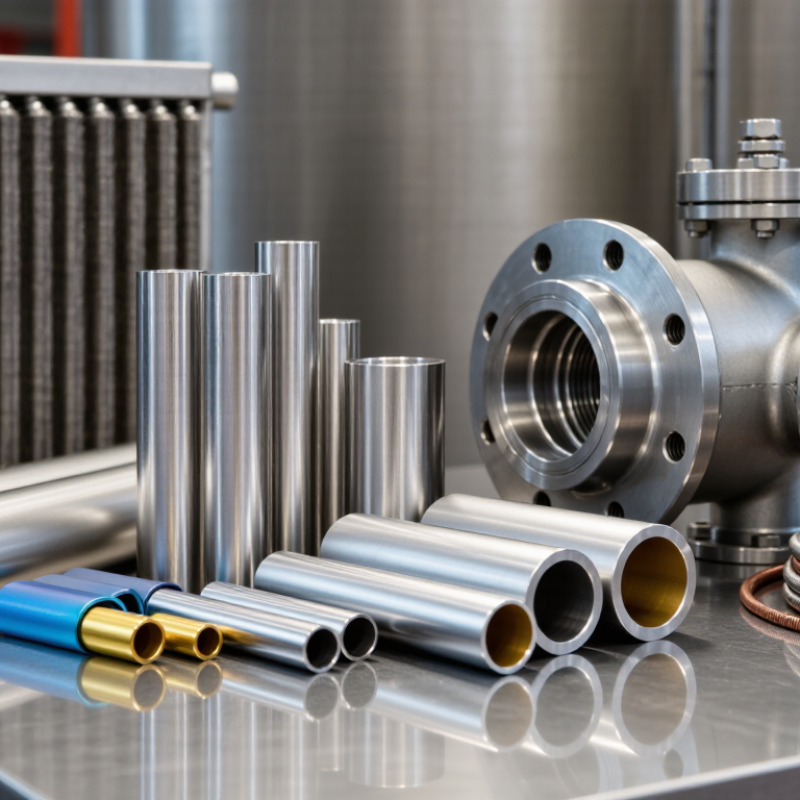
Nickel alloys are engineered metals with nickel as the main element, combined with chromium, iron, copper, molybdenum, or cobalt. Their exact chemistry controls strength, corrosion resistance, weldability, and temperature performance. Chromium helps form a protective oxide film, while molybdenum improves resistance to pitting in chloride environments. That distinction matters. Nickel-copper alloys suit marine components, nickel-chromium grades support heat-resistant equipment, and nickel-iron-chromium alloys serve pressure vessels and chemical processing systems. Common designations include Alloy 400, Alloy 600, Alloy 625, and Alloy 718. Each grade has different limits.
Demand is growing. The U.S. Geological Survey reported approximately 3.6 million metric tons of global mined nickel production in 2023, showing the scale of this industrial material. The International Energy Agency also identifies nickel as important for stainless steel and selected battery technologies. However, alloy demand is not identical to mined nickel demand. Processing quality matters. In practical plant inspections, a polished sample can hide grain-boundary attack or weld-related weakness. Engineers should review mill certificates, heat treatment, corrosion data, and service temperature before selecting a grade. Real operating evidence beats a catalog promise. It is not magic. Even a high-nickel alloy can fail when chloride concentration, stress, and temperature combine poorly. That uncomfortable detail deserves more attention.

What Is Nickel Alloy Types, Grades, and Uses?
Nickel alloys are classified by their chemistry, strengthening method, and intended service. Common types include commercially pure nickel, nickel-copper, nickel-chromium, nickel-iron-chromium, and nickel-chromium-molybdenum alloys. Each family responds differently to heat, pressure, oxidation, and corrosive liquids. Nickel-copper grades often suit seawater equipment, while nickel-chromium grades handle hot gases and oxidizing environments. Nickel-iron-chromium types are frequently selected for heat exchangers and chemical processing.
A grade identifies a more precise composition and specification within an alloy family.
It may define nickel content, chromium or molybdenum limits, carbon levels, heat treatment, and mechanical properties. Engineers commonly check UNS designations and applicable material standards before approving a grade. Product form matters too. A plate, tube, and forged fitting may require different requirements, even when their alloy family is identical. Classification is helpful, but it is not perfectly tidy. A simple table can hide important differences in manufacturing history and surface condition.
Tips:
Match the grade to the actual environment, not only the temperature. Check chloride exposure, acidity, flow speed, welding requirements, and expected service life. Request a mill certificate and verify heat treatment records. Small details matter. I have seen material choices look correct on paper, yet fail after an overlooked weld condition or unexpected deposit buildup. Corrosion testing under realistic conditions is often wiser than relying on a general alloy label.
Common Nickel Alloy Grades and Their Distinctive Features
Nickel alloy grades are selected for heat, corrosion, strength, or a combination of these demands. Nickel 200 and 201 contain very high nickel content and offer excellent resistance to caustic solutions. Grade 201 has lower carbon, which helps reduce graphitization during prolonged heating. These grades remain ductile and easy to form, but they are not ideal for every high-temperature application.
Nickel-copper alloy 400 performs well in seawater, alkaline environments, and some chemical processing equipment. Nickel-chromium-iron alloy 600 handles oxidation and elevated temperatures more effectively. For severe chloride exposure, alloy 625 provides stronger resistance to pitting and crevice corrosion. Alloy C-276 adds molybdenum and chromium for demanding chemical service, especially where mixed acids are present. No grade is perfect.
Precipitation-hardening alloy 718 combines high strength with useful performance at elevated temperatures. It appears in turbine components, fasteners, and heavily loaded industrial parts. However, heat treatment must be tightly controlled, or the expected strength may not develop. Welding also requires careful procedure qualification and inspection. In practical selection, engineers compare temperature, fluid chemistry, stress, fabrication method, and maintenance access. A laboratory corrosion test can guide the decision, but it may not reproduce real plant conditions. Cost matters too, although choosing a cheaper grade can create unexpected replacement work.
| Alloy family | Common grade / UNS designation | Approximate principal composition | Distinctive features | Typical uses |
|---|---|---|---|---|
| Commercially pure nickel | Nickel 200 UNS N02200 |
Nickel ≥99%; carbon normally ≤0.15% | Excellent resistance to caustic alkalis, good electrical and thermal conductivity, and good ductility. Limited for service involving sulfur above moderate temperatures. | Caustic evaporators, food-processing equipment, chemical-handling vessels, electrical components, and reducing-environment equipment. |
| Low-carbon commercially pure nickel | Nickel 201 UNS N02201 |
Nickel ≥99%; carbon normally ≤0.02% | Similar corrosion resistance to Nickel 200, with reduced susceptibility to carbon precipitation and embrittlement during prolonged exposure to elevated temperatures. | High-temperature chemical equipment, caustic-handling systems, electronic components, and applications requiring greater thermal stability than Nickel 200. |
| Nickel–copper alloy | Alloy 400 UNS N04400 |
Nickel 63–70%; copper 28–34% | Strong resistance to seawater, hydrofluoric acid, and alkaline solutions; good toughness over a broad temperature range. Susceptible to some stress-corrosion conditions in contaminated or stagnant seawater. | Marine valves and pumps, heat exchangers, chemical-processing equipment, oil and gas components, and desalination systems. |
| Nickel–chromium–iron alloy | Alloy 600 UNS N06600 |
Nickel ≥72%; chromium 14–17%; iron 6–10% | Good resistance to oxidation, carburization, chloride-ion stress corrosion cracking, and a wide range of corrosive media; maintains useful strength at elevated temperatures. | Heat-treatment equipment, chemical-processing components, furnace parts, nuclear power equipment, and aircraft-engine accessories. |
| Nickel–chromium–molybdenum–niobium alloy | Alloy 625 UNS N06625 |
Nickel ≥58%; chromium 20–23%; molybdenum 8–10%; niobium 3.15–4.15% | High strength without mandatory precipitation hardening, excellent resistance to pitting, crevice corrosion, chloride stress corrosion cracking, and seawater attack. | Marine hardware, offshore piping, aerospace components, chemical-processing equipment, pollution-control systems, and sour-gas service. |
| Nickel–iron–chromium precipitation-hardening alloy | Alloy 718 UNS N07718 |
Nickel 50–55%; chromium 17–21%; iron balance; niobium 4.75–5.50% | Very high tensile, fatigue, and creep strength up to approximately 650°C; good weldability compared with many other precipitation-hardening nickel alloys. | Gas-turbine disks and cases, rocket-engine components, high-temperature fasteners, power-generation equipment, and cryogenic parts. |
| Nickel–iron–chromium alloy | Alloy 800 UNS N08800 |
Nickel 30–35%; chromium 19–23%; iron balance | Good resistance to oxidation, carburization, nitridation, and high-temperature corrosion; useful strength for elevated-temperature structural service. | Petrochemical furnace tubes, heat exchangers, industrial heating equipment, and process piping. |
| Stabilized nickel–iron–chromium alloy | Alloy 800H UNS N08810 |
Nickel 30–35%; chromium 19–23%; iron balance; controlled carbon | Higher creep and rupture strength than Alloy 800 because of controlled carbon and grain-size requirements; designed for long-term high-temperature service. | Hydrogen reformers, ethylene furnaces, high-temperature heat exchangers, and petrochemical process equipment. |
| Nickel–molybdenum alloy | Alloy B-2 UNS N10665 |
Nickel balance; molybdenum 26–30%; very low chromium and iron | Outstanding resistance to reducing acids, especially hydrochloric acid, with low susceptibility to weld-zone corrosion when properly fabricated. Not intended for strongly oxidizing media. | Acid reactors, pumps, valves, piping, heat exchangers, and chemical-processing equipment exposed to reducing acids. |
| Nickel–chromium–molybdenum alloy | Alloy C-276 UNS N10276 |
Nickel balance; chromium 14.5–16.5%; molybdenum 15–17%; tungsten 3–4.5% | Broad resistance to oxidizing and reducing acids, pitting, crevice corrosion, and chloride stress corrosion cracking; suitable for severe mixed chemical environments. | Flue-gas desulfurization systems, chemical scrubbers, pollution-control equipment, waste-treatment plants, and aggressive chemical processing. |
Note: Composition ranges are typical nominal values; exact limits and allowable service temperatures depend on product form, heat treatment, applicable standard, and operating environment.
Nickel alloy applications now span aerospace, chemical processing, power generation, marine engineering, and medical equipment. These alloys combine nickel with chromium, molybdenum, iron, copper, or titanium. The mixture improves resistance to heat, oxidation, pressure, and aggressive chemicals. Common families include nickel-chromium, nickel-copper, nickel-iron, and precipitation-hardened grades. Each grade reflects a compromise between strength, weldability, cost, and corrosion performance.
The aerospace industry uses nickel-based alloys in turbine discs, combustion chambers, and exhaust components. These parts may face temperatures above 700°C, repeated thermal cycling, and high mechanical loads.
Chemical plants select nickel alloys for reactors, heat exchangers, and piping exposed to acids or chlorides. In power facilities, alloy tubing supports steam generation under severe pressure.
Marine systems also rely on nickel alloys around seawater, where pitting corrosion can develop quickly. Small defects matter.
USGS Mineral Commodity Summaries 2024 estimated global mined nickel production at about 3.6 million metric tons in 2023, with reserves exceeding 130 million metric tons. The International Energy Agency’s Global Critical Minerals Outlook 2024 identifies nickel as important for clean-energy supply chains, while noting geographic concentration risks.
Material selection cannot depend on a catalogue alone. Engineers must review temperature, fluid chemistry, stress, fabrication method, and inspection history. A corrosion table helps, but it never replaces testing. Field conditions are often less predictable than laboratory data.
Selecting a nickel alloy grade starts with the service environment, not the material catalogue. Nickel improves resistance to heat, oxidation, and aggressive chemicals, but each grade has limits. The U.S. Geological Survey reported approximately 3.7 million metric tons of mined nickel production in 2024. Demand remains closely linked to stainless steel and high-performance engineering. The Nickel Institute reports that stainless steel consumes roughly two-thirds of primary nickel.
Temperature changes the decision quickly. A nickel-copper grade may suit seawater equipment, while nickel-chromium-molybdenum grades perform better in acidic process streams. For heat exposure, engineers should check creep strength, thermal cycling, and oxidation resistance. A grade that survives a laboratory immersion test may still crack near a weld. That detail is often missed.
Fabrication matters as much as corrosion data. Review welding procedures, forming limits, machinability, and post-weld treatment before approval. Chloride concentration, flow velocity, pressure, and contamination should be recorded from the actual site. The International Energy Agency’s Global Critical Minerals Outlook 2024 identifies nickel as important for clean-energy supply chains, increasing pressure on material efficiency and traceability. Cost also needs a wider view. A cheaper grade can require thicker walls, more maintenance, or earlier replacement. No perfect grade exists. Selection should compare lifecycle risk, not only purchase price.