Top 10 Tips for Choosing Wear Resistant Steel Castings Effectively?
Choosing the right wear resistant steel castings can significantly impact your project’s success. These materials are essential in high-wear applications, such as mining or construction. However, many factors can influence the selection process.
Evaluate the specific requirements of your application. Consider factors like toughness, hardness, and abrasion resistance. Each type of wear resistant steel casting serves a unique purpose, and not all options are suitable for every task.
Many buyers overlook the importance of supplier reputation. Experienced suppliers often provide better quality products and support. You may struggle with poor performance if you select a lesser-known brand. Ultimately, take your time to research. Your choice of wear resistant steel castings is crucial for durability and efficiency.
Understanding Wear Resistant Steel Castings: Key Characteristics
Wear resistant steel castings are crucial in industries that deal with heavy machinery and harsh environments. These materials need to withstand abrasion, impact, and corrosion. Key characteristics define their effectiveness. The alloy composition is vital. A higher chromium content generally indicates superior wear resistance. However, too much chromium can make the material brittle.
Another important characteristic is hardness. The harder the steel, the more resistant it is to wear. Yet, softer materials might provide better ductility. It's a balance that requires careful consideration. Microstructure also plays a role. For example, a fine-grain microstructure often enhances toughness. Conversely, a coarse microstructure might lead to weaknesses in high-stress situations.
Evaluating each characteristic is key to making an informed choice. Look for certifications and test results that validate claims. However, testing methods can vary, leading to misconceptions. It’s essential to seek clarity in specifications and requirements. Recognizing these nuances helps in selecting the right material for specific applications.
Identifying Specific Application Requirements for Optimal Selection
When selecting wear-resistant steel castings, understanding specific application requirements is crucial. Each industry has unique demands that can affect material choices. For example, mining equipment faces heavy impact and abrasion. In contrast, agricultural machinery may experience different types of wear. Identifying these factors will guide your decisions effectively.
Consider operational conditions like temperature and pressure. High temperatures can weaken some alloys, while others may become brittle. Additionally, the environment plays a role. Work in corrosive conditions may require coatings or special materials. These details are often overlooked but can significantly impact performance.
Analyzing the end-use is essential too. Will the casting be stationary or mobile? Will it handle heavy loads or lighter tasks? Understanding these specifics helps narrow down options. The right choice can enhance longevity and reduce replacement costs. Ignoring these factors may lead to costly mistakes. Reflection on these elements is necessary for successful selection.
Top 10 Tips for Choosing Wear Resistant Steel Castings Effectively
Evaluating Material Properties: Hardness, Toughness, and Fatigue Resistance
When selecting wear resistant steel castings, evaluating material properties is crucial. Hardness, toughness, and fatigue resistance are three key factors. For example, hardness often defines the wear resistance of a material. Steel castings with a hardness level above 55 HRC typically demonstrate superior performance in abrasive environments. However, it's vital to balance hardness with toughness. Materials that are too hard can become brittle, leading to potential failure.
Toughness measures a material's ability to absorb energy without fracturing. A report by the Materials Research Institute highlights that materials with a toughness of over 60 J/cm² are often preferable in heavy-duty applications. They can withstand impact loads without cracking. Fatigue resistance is also critical. Steel castings must endure cyclic stresses. The American Foundry Society states that fatigue resistance is essential for components subject to repetitive loading. A casting's design must account for these repeated stresses to avoid premature failure.
In real-world applications, failing to consider these factors can lead to significant issues. There are instances where overly hard castings did not perform well. This highlights the need for thorough analysis and testing. Bridging the gap between hardness and toughness can ensure longevity and reliability. Careful evaluation of these properties is essential for effective material selection.
Top 10 Tips for Choosing Wear Resistant Steel Castings Effectively
| Property |
Description |
Typical Values |
Importance |
| Hardness |
Resistance to deformation and scratching. |
HRC 50-65 |
High |
| Toughness |
Ability to absorb energy and resist fracture. |
20-40 J |
Medium |
| Fatigue Resistance |
Ability to withstand cyclic loading. |
250-300 MPa |
High |
| Wear Resistance |
Ability to resist wear from abrasive materials. |
20-30 mm³ |
Very High |
| Impact Toughness |
Resistance to high-stress impacts. |
35-50 J |
High |
Comparing Manufacturing Techniques for Quality and Performance
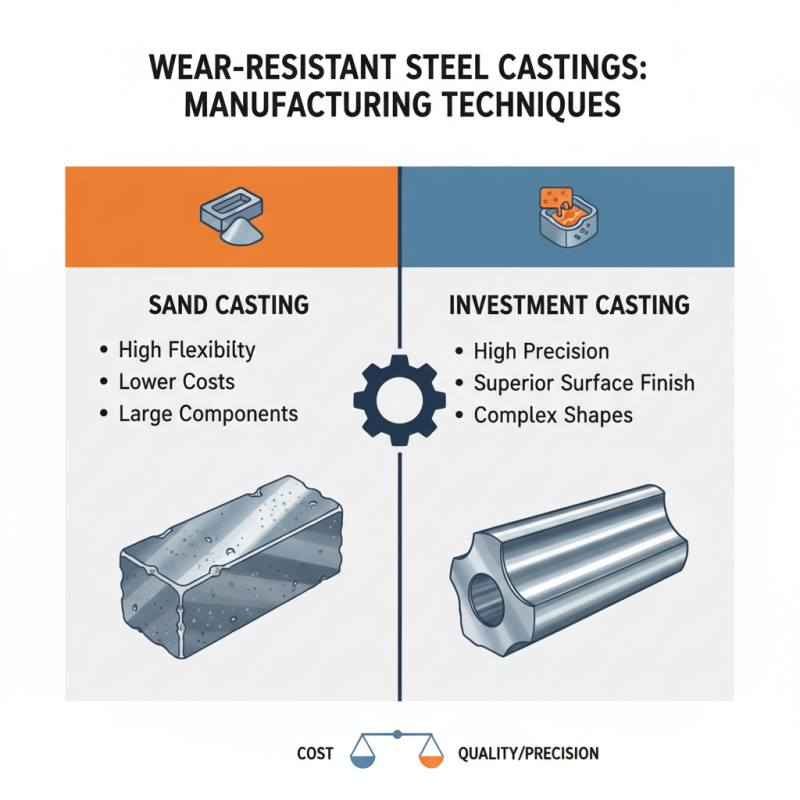
When selecting wear-resistant steel castings, manufacturing techniques significantly impact quality and performance. Different methods like sand casting and investment casting each have unique advantages. Sand casting offers high flexibility and lower costs. Investment casting, however, provides great precision and surface finish, albeit at a slightly higher price point.
According to a report by the Casting Industry National Trade Association, nearly 70% of wear-resistant components utilize sand casting methods due to lower costs. However, the quality can vary. Some castings may exhibit defects like shrinkage or surface irregularities. It is advisable to take these potential flaws into account.
The choice of technique shouldn't just hinge on cost. Performance metrics are essential. For example, investment castings can achieve tolerances up to +/- 0.005 inches. If you're aiming for durability, investing in high-quality techniques may be worth the added expense. Balancing cost with precision is crucial for effective decision-making.
Considering Cost-Effectiveness and Longevity in Casting Choices
When selecting wear-resistant steel castings, cost-effectiveness and longevity are critical factors. A detailed analysis is essential. Consider the initial purchase price versus the expected lifespan. Shorter lifespans mean more frequent replacements, which can increase overall costs. Investing in higher quality materials may have a greater initial cost but often pays off through durability.
Look at the environmental conditions where the castings will operate. Factors like temperature, humidity, and exposure to chemicals can affect their longevity. Sometimes, cheaper options wear out faster in harsh conditions. In addition, evaluate the casting process itself. A poorly executed casting can result in defects, diminishing longevity. Assessing manufacturing technologies can also reveal cost-effective choices.
We should not overlook the importance of proper maintenance. Even the best wear-resistant materials deteriorate without care. Regular inspections and timely repairs extend service life. At times, we may underestimate maintenance costs. Balancing these factors helps make informed decisions. Ultimately, the right casting choice requires careful thought, blending quality with economic sense. Every detail matters in ensuring long-term success.