Top Tips for Choosing the Best Wear Rollers in 2026?
The demand for Wear Rollers is growing rapidly, driven by advancements in manufacturing and industry needs. Reports indicate that the global wear rollers market is projected to reach $4.5 billion by 2026. This rise is largely due to the increasing adoption of automation in various sectors. As production processes become more efficient, the role of wear rollers becomes crucial.
Choosing the right wear rollers can be daunting. Many factors, such as material compatibility and application-specific requirements, play a vital role. Quality should not be compromised; even small differences in roller design can lead to significant performance variations. A recent study revealed that subpar rollers can decrease equipment efficiency by up to 15%. Therefore, careful evaluation is essential.
Many buyers may rush their decisions. This often leads to selecting inappropriate wear rollers that fall short of expectations. Reflecting on this trend, experts urge a thorough analysis of supplier options. Understanding durability and maintenance costs can make a difference. Investing time in research upfront can yield substantial long-term benefits in operational performance.

Understanding Wear Rollers: Importance and Applications in 2026
Wear rollers play a significant role in various industries, especially in 2026. These components are essential for transporting materials smoothly in manufacturing and distribution processes. Their ability to minimize friction is vital. This leads to increased efficiency in operations, reducing energy consumption.
Applications of wear rollers can be found in conveyor systems, packaging machinery, and even in agriculture. In food processing, for instance, they ensure safe handling of products. However, some factors need careful consideration. Material selection is crucial for durability. Different environments require specific materials. Not all rollers are suitable for every application.
Installation and maintenance are often overlooked. Regular inspections can prevent failures. Worker training is necessary to avoid misuse. Ignoring these aspects could lead to costly downtime. Therefore, understanding the importance of wear rollers helps make informed decisions. It's about balancing options and demands.
Key Materials Used in Manufacturing Wear Rollers
When selecting wear rollers, the materials used in their manufacturing play a crucial role. High-quality materials enhance durability and performance. Common materials include polyurethane, rubber, and certain metals. Polyurethane is popular for its resilience and resistance to abrasions. It can withstand harsh conditions without compromising integrity. Rubber offers flexibility and shock absorption, making it ideal for various machinery.
However, not all materials are perfect for every application. It's vital to assess the operating environment. For example, metal rollers excel in heavy-duty applications but may corrode in moist conditions. This could lead to additional maintenance costs. Additionally, lighter materials might be necessary for certain designs, affecting overall performance.
Choosing the right material often requires careful consideration. Compatibility with other components is essential. The wrong choice can lead to unanticipated wear and failure. Regular evaluations of roller performance can provide insights into material effectiveness. This process is iterative, ensuring that choices not only meet immediate needs but also adapt to evolving operational demands.
Top Tips for Choosing the Best Wear Rollers in 2026
This bar chart illustrates the percentage of usage for different materials used in manufacturing wear rollers as of 2026. Understanding the composition of wear rollers aids in selecting the best option for specific applications.
Factors to Consider When Selecting Wear Rollers for Specific Needs
When choosing wear rollers for specific applications, several key factors must be assessed. The material of the roller is crucial. For example, steel rollers are known for their durability but may not perform well in certain environments. In contrast, polyurethane rollers offer better abrasion resistance. Industry reports suggest that 40% of roller failures stem from material incompatibility.
The load capacity is another pivotal element. Each application has unique demands, and poorly chosen rollers can lead to operational issues. A study by the Machinery Research Institute found that 30% of equipment downtime is linked to roller overload. Evaluating the specific weight and distribution of materials being processed helps in selecting the correct roller.
Finally, environmental conditions play a significant role. Rollers used in high-temperature settings need special coatings or materials to withstand heat. Conversely, rollers exposed to moisture require anti-corrosive properties. An oversight in environmental assessment can lead to premature wear. It’s essential to gather data and feedback from actual usage scenarios to inform decisions. This approach reduces trial and error and enhances overall efficiency.
Top Tips for Choosing the Best Wear Rollers in 2026
| Feature |
Importance |
Recommended Material |
Applications |
| Load Capacity |
High |
Steel |
Heavy machinery |
| Surface Hardness |
Medium |
Carbide |
Mining equipment |
| Temperature Resistance |
High |
Ceramic |
High-temperature environments |
| Corrosion Resistance |
Medium |
Stainless Steel |
Outdoor applications |
| Cost Efficiency |
High |
Composite |
General purpose |
Evaluating Durability and Performance of Wear Rollers
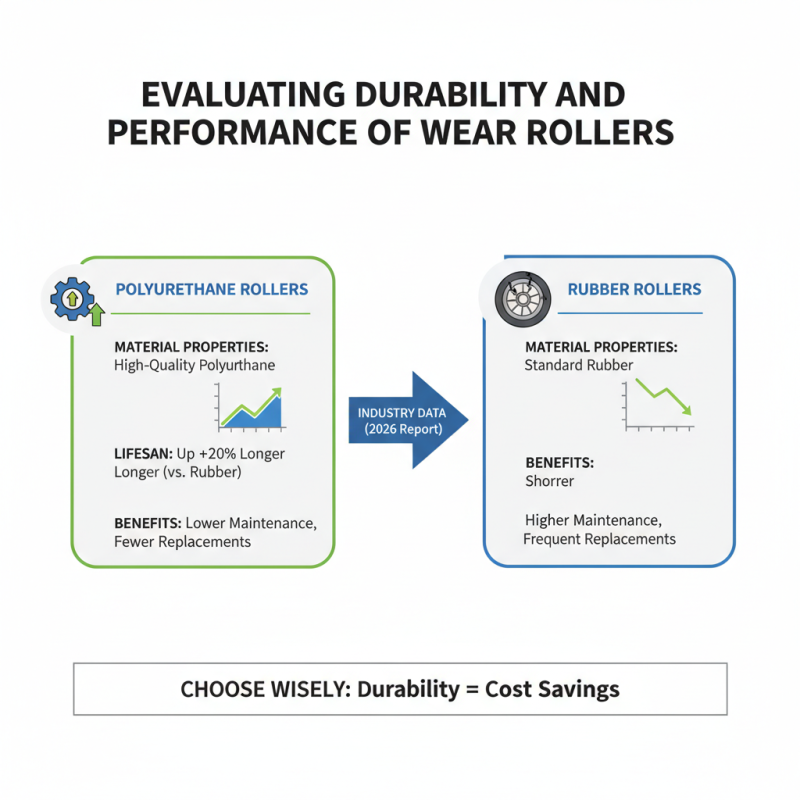
When choosing wear rollers in 2026, evaluating durability and performance is crucial. A complete understanding of material properties plays a significant role. For example, data from industry reports indicate that high-quality polyurethane rollers exhibit a lifespan up to 20% longer than their rubber counterparts. This increased longevity often translates into lower maintenance costs and fewer replacements.
However, not all wear rollers are created equal. Users should consider the conditions in which the rollers will operate. Environments with extreme temperatures or heavy loads can drastically impact performance. An analysis of thermal properties shows that certain materials begin to degrade after just a few months under intense heat. Therefore, proper testing under these conditions is essential.
Quality assurance is another critical aspect that can't be overlooked. Inconsistent manufacturing can lead to unexpected failures. Reports highlight that 15% of roller failures are attributed to defects during production. It is important to request detailed reports and testing results. Doing so allows users to make informed decisions based on potential risks and performance metrics. Balancing cost and quality is key, yet many businesses still overlook these factors.
Top Brands and Products to Consider in the Wear Roller Market 2026
When exploring wear rollers in 2026, consider several key brands and products making waves. The market is evolving rapidly. Many companies are investing in innovation, improving material durability and performance. Look for rollers constructed from advanced composites. These materials often enhance longevity, providing better resistance to wear and tear.
It’s essential to evaluate the specific needs of your application. Different environments require different solutions. Some rollers perform well in high-temperature settings, while others excel in wet conditions. Assess compatibility with your machinery, as not all rollers fit every model or task.
Don’t overlook customer reviews. They can provide insight into real-world performance. Often, products may look appealing but fall short in actual use. Many users highlight issues like noise and vibration. Such feedback can guide your decision. Choosing the right wear roller involves a mix of research and practical testing. This approach could save time and resources.