What Are the 2026 Top Types of High Wear Resistance Steel?
In 2026, High Wear Resistance Steel will remain critical for mining, recycling, construction, and bulk-material handling. Chutes, crusher liners, and excavator buckets face constant impact and abrasion. Small hardness differences can change maintenance intervals significantly.
A single global ranking does not exist. Application conditions decide the best choice. Abrasion-resistant quenched and tempered plate, martensitic wear steel, chromium carbide overlay plate, and advanced boron-alloyed grades deserve close attention. ASTM G65 offers a recognized method for comparing abrasive wear resistance, while EN 10025 and EN 10029 support important steel and dimensional specifications. These standards help, but they do not replace field trials. Real rock, moisture, impact energy, and welding quality can alter results.
Industry scale also matters. World Steel Association reported approximately 1.88 billion tonnes of crude steel production in 2024, showing the enormous supply base behind specialized steel products. Its World Steel in Figures 2025 report also highlights steel’s continuing role across global infrastructure and manufacturing. Meanwhile, the U.S. Geological Survey’s Mineral Commodity Summaries 2025 emphasizes the strategic importance of iron ore and steel-related raw materials. These reports provide market context, not a definitive wear-grade ranking. The evidence is incomplete.
This guide examines the leading 2026 types through hardness, toughness, weldability, thickness, and lifecycle cost. A harder plate is not always better. Excessive hardness may increase cracking risks during fabrication or impact service. The practical answer often comes from balancing laboratory data with measured site performance. That balance deserves more attention.
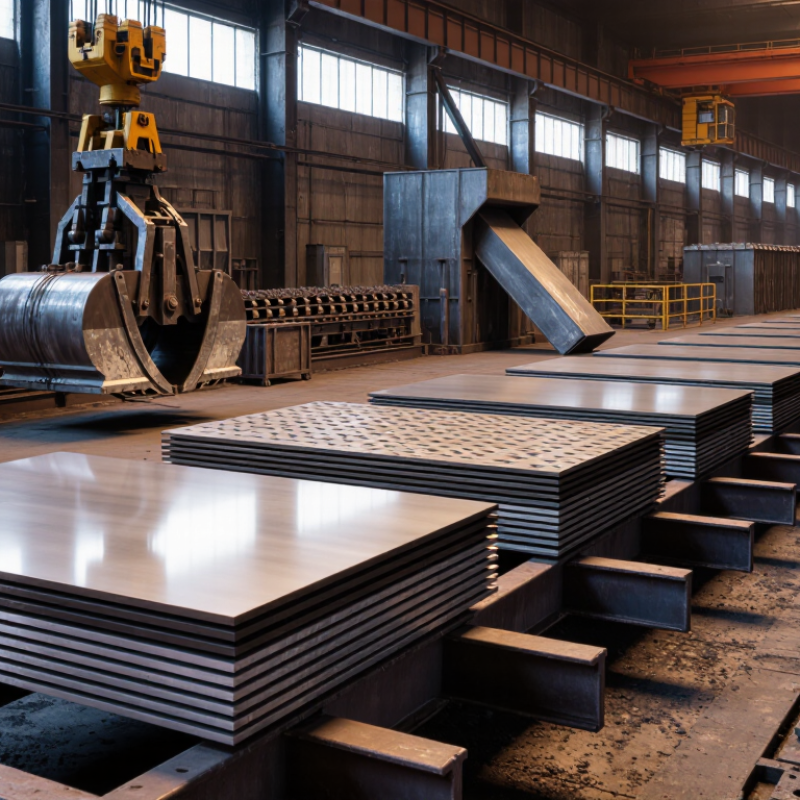
Definition and Key Properties of High Wear Resistance Steel
High wear resistance steel is engineered to resist material loss under repeated friction, impact, or sliding contact. It is not simply the hardest steel available. Its performance depends on hardness, toughness, microstructure, and working conditions. In 2026, common types include quenched and tempered abrasion-resistant steel, austenitic manganese steel, martensitic steel, and carbide-reinforced surfaces.
Hardness slows scratching and cutting. Toughness helps the steel survive sudden blows without cracking. A balanced grade can protect a loader bucket, crusher liner, conveyor part, or dump body. Quenched and tempered steel offers reliable abrasion resistance with useful weldability. Austenitic manganese steel can harden during impact, making it suitable for heavy crushing zones. Martensitic grades provide high hardness, but careless welding may create brittle areas.
Material selection should begin with the actual wear pattern. Sliding sand requires different properties than large rock impact. Plate thickness, heat exposure, load speed, and maintenance access also matter. A hardness value alone can mislead. It may look impressive on a test sheet.
In field inspections, uneven wear often reveals poor alignment, excessive impact, or unsuitable steel. Even a strong grade can fail there. Engineers should review test standards, chemistry, heat treatment, and welding procedures before approval. Some recommendations remain uncertain because laboratory abrasion tests cannot perfectly copy changing site conditions. Small trials and regular thickness measurements provide more dependable evidence.
Main Types of High Wear Resistance Steel in 2026
In 2026, the main types of high wear resistance steel remain quenched-and-tempered martensitic steel, austenitic manganese steel, boron steel, and tool steel. Quenched-and-tempered grades commonly reach 400–600 HBW, according to typical values aligned with ISO 6506-1 testing. They suit dump bodies, liners, crushers, and excavator buckets. Their strength is predictable, but welding and bending require controlled heat input.
Austenitic manganese steel
Austenitic manganese steel, covered by ASTM A128/A128M, starts relatively ductile and hardens under repeated impact. Its surface may rise from roughly 200 HBW toward 500 HBW or more in severe service. It performs well in rail crossings, jaw crushers, and impact zones. Boron steel offers high hardness after controlled quenching, often around 450–600 HBW. It is useful for agricultural blades and abrasion-heavy structural parts. Still, excessive hardness can reduce repair flexibility.
Tool steel provides strong edge retention for cutting and forming applications. High-alloy stainless wear grades add corrosion resistance, though they usually cost more. The World Steel Association’s World Steel in Figures 2025 reports about 1.88 billion tonnes of crude steel production in 2024, showing the scale of steel demand behind these specialized grades. The USGS Mineral Commodity Summaries 2025 reports global manganese production at roughly 20 million metric tons, supporting continued interest in manganese-based wear solutions. Hardness alone misleads. Impact, moisture, temperature, and maintenance often change the best choice. Field selection is still imperfect. Test the real material.
Chemical Composition and Manufacturing Methods
In 2026, the leading high-wear steels remain AR400, AR450, AR500, AR600, and boron-alloyed martensitic grades. Their numbers indicate approximate Brinell hardness, not a universal chemical formula. AR400 commonly uses about 0.15–0.25% carbon, with manganese, chromium, and small additions of molybdenum or boron. Higher grades usually need tighter chemistry control. More carbon improves hardness, but it can reduce weldability.
According to the World Steel Association, global crude steel production reached about 1.88 billion tonnes in 2024. This scale increases pressure to reduce plate replacement, especially in mining, recycling, quarrying, and bulk-material handling. Manufacturing therefore matters as much as chemistry. Producers melt and refine steel through basic oxygen or electric arc routes, then apply controlled rolling, accelerated cooling, direct quenching, or conventional quench-and-temper treatment. These steps create a hard martensitic surface and a tougher internal structure.
Small variations matter. A few degrees in quenching temperature can change hardness and impact performance. Poor cooling control may create residual stress, edge cracking, or uneven wear. That is easy to underestimate. The 2025 ASTM steel standards emphasize verified mechanical properties, heat treatment, and test sampling rather than chemistry alone. In practice, AR500 may last longer against sharp mineral particles, while AR400 can resist impact better during heavy loading. Harder is not always better. Welding procedure qualification, preheating, hydrogen control, and actual service temperature still require review. These are the details that material selection tables often simplify too aggressively.
What Are the 2026 Top Types of High Wear Resistance Steel?
Typical chemical composition and manufacturing methods
Hadfield Austenitic Steel
Usually contains about 1.0–1.4% carbon and 11–14% manganese. It is commonly produced by casting, solution heat treatment, and rapid water quenching. Its surface hardens under impact.
High-Chromium White Cast Iron
Typically contains 2.0–3.5% carbon and 12–30% chromium. It is made by alloy casting followed by destabilization heat treatment to develop hard chromium carbides.
D2 Cold-Work Tool Steel
Generally contains 1.4–1.6% carbon and 11–13% chromium, with molybdenum and vanadium additions. Manufacturing normally includes forging or powder metallurgy, vacuum hardening, and tempering.
M2 High-Speed Steel
Commonly contains about 0.8–0.9% carbon, 3.8–4.5% chromium, 4.5–5.5% molybdenum, 5.5–6.7% tungsten, and 1.7–2.2% vanadium. It is produced by conventional melting or powder metallurgy, followed by high-temperature hardening and multiple tempering.
The chart shows representative midpoint values from commonly specified composition ranges. Actual grades vary by standard and producer. Wear performance also depends on heat treatment, carbide structure, impact load, and abrasive conditions.
Selection Criteria and Industrial Applications
What Are the 2026 Top Types of High Wear Resistance Steel?
Selecting high wear resistance steel requires more than comparing hardness values. In 2026, common choices include quenched-and-tempered plate, martensitic steel, and carbide-alloyed grades. Each type suits a different wear pattern. Abrasion-resistant plate works well under sliding contact, impact, and mineral handling. Martensitic steel offers strong hardness and practical weldability. Carbide-alloyed steel can resist severe gouging, but it may require careful fabrication. The correct choice depends on load, particle size, impact energy, temperature, and maintenance access. A harder grade is not always better. It may crack when impact becomes excessive.
Industrial experience shows that application details often decide service life. Quarry liners face sharp rock and repeated impact. Conveyor chutes usually need balanced toughness and abrasion resistance. Agricultural blades require edge retention, bend resistance, and reliable field repair. Mining screens may need both hardness and fatigue resistance. Engineers should review plate thickness, forming limits, welding procedures, and expected replacement intervals. A small mismatch can create expensive downtime. Site records remain valuable. Laboratory data alone cannot describe every working condition.
Tips: Examine the actual wear mechanism before choosing a grade. Request certified mechanical and chemical test data. Confirm hardness across the full thickness, not only the surface. Check weld preheating requirements early. Leave room for design review. Some specifications look precise but still miss seasonal temperature changes, uneven feeding, or operator habits. A short field trial can reveal weaknesses before full production.