Choosing the China Best Manganese Steel Castings Supplier? This decision requires more than comparing prices or reading polished brochures. Manganese Steel Castings must survive impact, abrasion, and repeated deformation in demanding equipment.
Sir Robert Hadfield, the metallurgist who developed Hadfield steel, described its key behavior clearly: “The steel possesses the property of becoming harder by use.” That principle still guides modern crusher liners, jaw plates, railway components, and dredging parts. However, performance depends on more than manganese content. Carbon balance, alloy uniformity, casting design, heat treatment, and final inspection all matter.
A reliable Chinese supplier should provide traceable material certificates, heat-treatment records, dimensional reports, and impact or hardness results. Ask how the foundry controls shrinkage, internal porosity, and quenching speed. These details often decide whether a casting lasts months or several years.
Look closely.
Factory experience matters. So does communication.
Experienced manufacturers can explain why a specific grade suits wet sand, high-impact stone, or recycled metal. They should also discuss limitations honestly. Manganese steel may harden effectively under impact, but it can perform poorly in low-impact abrasion. That distinction is sometimes ignored in sales materials.
The strongest supplier is not always the cheapest. It is the one that connects metallurgical knowledge with consistent production. Still, no supplier is perfect. Even a well-managed foundry can face casting variation or delayed feedback. Buyers should therefore inspect samples, verify references, and begin with a controlled trial order. This practical process creates more reliable evidence than promises alone.
Manganese steel castings, often called Hadfield steel, usually contain 11–14% manganese and about 1.0–1.4% carbon. Their key feature is work hardening. Under repeated impact, the surface becomes harder while the inner structure remains tough. This balance helps castings resist gouging, shock, and sudden fracture. They are commonly used in crushers, railway crossings, excavator buckets, and heavy-duty liners.
The USGS Mineral Commodity Summaries 2024 estimated global manganese mine production at approximately 20 million metric tons in 2023. This large supply supports steelmaking and wear-resistant casting production. However, ore availability does not guarantee casting quality. Chemical control, heat treatment, and mold design remain decisive. A casting may look sound but fail early if cooling is uneven.
In practical testing, suppliers should provide heat numbers, chemical analysis, hardness results, and impact-test records. ASTM A128 specifications are often used as a technical reference for manganese steel castings. Ask how the supplier controls shrinkage and weld-repair procedures. Small details matter.
Manganese steel is not automatically the best choice. Low-impact abrasion may require another alloy. Even experienced engineers can over-specify it. Selection should match material size, impact energy, temperature, and maintenance conditions.
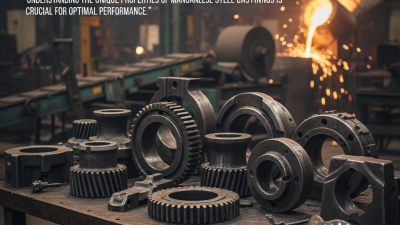
China Best Manganese Steel Castings Supplier?
China’s manganese steel casting industry combines traditional foundry skills with controlled industrial testing. Production begins with carefully selected steel scrap, ferroalloys, and clean furnace materials. Electric furnaces melt the charge at high temperatures, while technicians monitor chemistry during refining. Manganese content must remain within the approved specification. Small chemistry changes can affect toughness and work-hardening behavior.
Molten steel enters resin-sand or precision molds designed for crusher liners, rail components, and impact-resistant parts. After solidification, workers remove gates and risers before heat treatment. Water quenching creates the desired austenitic structure, but timing matters greatly. Machining follows only where necessary, because excessive cutting can reduce useful surface performance. Experienced quality teams inspect dimensions, hardness, surface defects, and internal porosity using suitable non-destructive methods. Material certificates and inspection records improve traceability, although paperwork alone cannot replace process control.
Tips: Ask the supplier for heat numbers, chemical analysis, tensile data, and heat-treatment records. Confirm mold drawings and tolerances before production. Request sample inspection photos, but remember that photos cannot prove internal quality. Manganese steel may look ordinary after machining. Its real performance appears under repeated impact. Even skilled factories face variation between heats, so reviewing failed parts can reveal more than praising successful ones. A practical supplier should discuss those weaknesses openly and adjust pouring, cooling, or inspection procedures when evidence demands it.
| Data Dimension | Representative Industry Data | Production or Application Significance | Reference or Technical Note |
|---|---|---|---|
| Material Family | Austenitic manganese steel, commonly known as Hadfield steel | Designed for components exposed to repeated impact, abrasive wear, or work hardening. | Commonly specified for crusher liners, jaw plates, cone liners, rail crossings, hammers, and dredging components. |
| Typical Manganese Content | Approximately 11%–14% Mn for many standard grades | Supports an austenitic matrix and contributes to toughness and work-hardening behavior. | The exact range depends on the applicable grade, product design, and casting specification. |
| Typical Carbon Content | Approximately 0.9%–1.4% C | Contributes to strength and wear performance but must be controlled to limit undesirable carbide formation. | Carbon limits vary by grade and section thickness. |
| Common Alloy Adjustments | Chromium, molybdenum, nickel, or other alloying additions may be used | Alloy adjustments can improve hardenability, resistance to specific wear conditions, or performance in heavy sections. | Alloy selection should be based on impact level, abrasion type, section size, and service temperature. |
| Casting Methods | Sand casting, resin-sand casting, water-glass sand casting, and precision-related methods for selected geometries | Process selection affects dimensional accuracy, surface quality, production volume, and tooling cost. | Large crusher and mining components are commonly produced using chemically bonded or other engineered sand-mold systems. |
| Pattern and Mold Design | Machining allowance, solidification shrinkage allowance, risers, chills, and feeding paths are engineered before pouring | Proper design reduces shrinkage cavities, misruns, hot tears, porosity, and dimensional nonconformity. | Simulation may be used for complex or large castings to predict filling and solidification behavior. |
| Melting Equipment | Induction furnaces and electric arc furnaces are widely used in foundry production | These furnaces provide controllable melting, alloy adjustment, and temperature management for manganese steel. | Charge materials and furnace practice must minimize harmful contamination and control phosphorus, sulfur, and hydrogen risks. |
| Pouring Temperature | Typically controlled within an approximate range of 1,400°C–1,500°C, depending on grade and casting design | Temperature control balances mold filling ability against oxidation, gas pickup, and excessive grain growth. | The final target should be established by the foundry through grade, section thickness, mold type, and process trials. |
| Heat Treatment | Solution treatment commonly uses heating near 1,000°C–1,100°C followed by rapid water quenching | Rapid cooling helps retain a tough austenitic structure and reduces harmful carbide precipitation. | Actual heating time and temperature depend on casting thickness, alloy chemistry, furnace capability, and applicable specification. |
| As-Quenched Hardness | Often approximately 180–230 HB for conventional austenitic manganese steel | The relatively moderate initial hardness allows the surface to deform and harden under impact or high contact stress. | Hardness limits vary by grade, heat treatment, sampling location, and test method. |
| Work-Hardened Surface | May reach approximately 400–550 HB in severe service conditions | The service surface becomes harder while the underlying material can retain high toughness. | The achieved hardness depends strongly on impact energy, contact pressure, material support, and operating conditions. |
| Mechanical Performance Profile | High toughness, high impact resistance, and strong work-hardening response | Suitable for applications where abrasive wear occurs together with repeated impact or compressive loading. | It may perform less effectively in low-impact sliding abrasion than alloys specifically optimized for high initial hardness. |
| Typical Component Weight | From several kilograms to several tonnes, depending on equipment and application | Foundries serving mining, quarrying, cement, and infrastructure sectors commonly produce both small wear parts and large structural castings. | Maximum practical size is determined by molding equipment, furnace capacity, lifting systems, heat-treatment capability, and inspection requirements. |
| Dimensional Inspection | Coordinate measurement, templates, gauges, calipers, and drawing-based inspection | Confirms mounting interfaces, wear profiles, bolt holes, machining allowances, and critical dimensions. | Inspection frequency should be defined by the purchase specification and production control plan. |
| Internal Quality Inspection | Visual inspection, hardness testing, chemical analysis, and nondestructive testing when required | Helps identify surface defects, chemistry deviations, heat-treatment problems, and internal discontinuities. | Ultrasonic, magnetic-particle, dye-penetrant, or radiographic testing may be selected according to geometry and acceptance criteria. |
| Common Defects to Control | Shrinkage, gas porosity, inclusions, cracks, misruns, cold shuts, dimensional distortion, and excessive carbides | Defect prevention improves service life, reduces machining and rework, and increases casting reliability. | Controls include charge-material management, slag removal, mold preparation, feeding design, pouring discipline, and heat-treatment verification. |
| Applicable Standards | ASTM A128/A128M and relevant national, sector, or customer specifications | Standards provide requirements or guidance for chemical composition, mechanical properties, testing, and acceptance. | The applicable standard should be confirmed before production because requirements differ by component and end-use sector. |
| Supplier Evaluation Criteria | Material consistency, casting-process control, heat-treatment records, inspection capability, traceability, and technical support | A capable supplier should demonstrate repeatable quality rather than relying only on a single test result or a low quoted price. | Requesting sample reports, process documentation, dimensional records, and service feedback can improve supplier qualification. |
| Best-Fit Applications | Jaw crushers, gyratory crushers, cone crushers, impact zones, rail frogs, mill components, and heavy-duty wear systems | These applications typically combine impact, compressive stress, and abrasive contact—conditions that promote manganese steel work hardening. | Material selection should be validated against actual feed size, hardness, moisture, throughput, impact energy, and maintenance intervals. |
China Best Manganese Steel Castings Supplier?
Manganese steel castings are selected for impact, not hardness alone. Common grades contain about 11–14% manganese and 1.0–1.4% carbon. ASTM A128 grades, including A, B-1, B-2, and B-3, adjust chemistry for different service demands. Exact limits must be checked against the current specification. Material certificates matter.
The defining feature is work hardening. A crusher jaw may begin with moderate surface hardness, then harden under repeated impact. Its austenitic structure absorbs shock while resisting gouging abrasion. High-impact feed usually needs strong toughness and sufficient section thickness. Sliding abrasion may require a different alloy strategy. Heat treatment is critical. Water quenching after solution treatment helps preserve the required structure and prevents brittle carbide networks.
Small details affect service life.
Inspectors should review chemistry, casting soundness, heat-treatment records, and dimensional accuracy. Radiography may reveal internal shrinkage, while hardness mapping can expose uneven processing. Manganese steel is not automatically suitable for every abrasive condition. Excessive low-impact wear can polish the surface without producing useful work hardening. That is an easy mistake. Even a correct grade can fail when the casting is thin, poorly supported, or installed with excessive clearance. Real selection should compare feed size, impact energy, temperature, liner geometry, and replacement intervals. Performance data should come from comparable operating conditions, not attractive catalog numbers.
Choosing a manganese steel castings supplier in China requires more than comparing quoted prices. Start by checking proven experience with your crusher, liner, or rail component. Ask for recent production records, heat numbers, and photographs of finished castings. The details matter. A capable supplier should explain alloy selection, carbon balance, heat treatment, and expected wear performance. Request sample reports for chemical composition, hardness, tensile strength, and impact testing.
A factory visit can reveal more than a sales presentation. Look at furnace controls, mold preparation, heat-treatment records, machining accuracy, and storage conditions. Traceability should follow each casting from raw materials to final inspection.
Ask how defects are handled, not just how quality is advertised. Independent inspection can confirm dimensions and internal soundness before shipment. Ultrasonic or magnetic testing may be useful, depending on geometry and specification.
Reliable communication is equally important. Confirm drawings, tolerances, delivery stages, packaging, and corrective-action procedures in writing. A supplier that asks precise questions often understands production risks better. Still, no evaluation is perfect. A clean sample may not represent every production batch. I would compare multiple trial castings and review wear results in actual service. One practical weakness remains: site audits take time, and technical reports can be incomplete. That is why ongoing inspection and honest feedback should continue after the first order.
China’s manganese steel castings serve industries where impact and abrasion quickly damage ordinary carbon steel. Mining is the largest user. Jaw crushers, cone crushers, grizzlies, and shovel components often need hardened working surfaces with tough cores. The U.S. Geological Survey’s Mineral Commodity Summaries 2025 reports that steelmaking consumes roughly 90% of global manganese use. That connection explains the material’s continuing industrial importance.
Aggregates and construction recycling plants also use Chinese manganese castings in crusher liners and wear plates. Cement plants apply them to grinding and conveying equipment, although alloy selection depends on impact intensity and particle size. Rail infrastructure uses manganese steel for selected crossings, switch parts, and high-impact components. The International Energy Agency reported that global cement production remains near four billion tonnes annually, indicating substantial demand for durable processing equipment. World Steel Association data also recorded about 1.88 billion tonnes of crude steel production in 2024, supporting continued demand for manganese-bearing wear solutions.
Practical experience shows that casting quality matters as much as chemistry. Heat treatment, section thickness, machining allowance, and inspection records can change service life. A lower purchase price may become expensive after premature liner failure. Still, manganese steel is not universal. It may perform poorly under mainly sliding abrasion or insufficient impact. Specifications should include hardness, chemical composition, dimensional tolerances, and test evidence. The boundary is not perfectly clean. Engineers should review actual failure patterns before choosing a Chinese supplier.
Manganese steel castings are widely used where equipment faces repeated impact and abrasive wear. The chart shows the number of representative application types commonly associated with each industry; it is an application-count comparison, not a market-share ranking.
Typical applications include crusher jaw plates, cone and gyratory crusher liners, impact crusher parts, grinding mill liners, rail frogs and crossings, shredder components, and wear-resistant bucket or chute liners. Final material selection depends on impact load, abrasion conditions, section thickness, heat treatment, and required service life.