Choosing the best China Stainless Steel Castings supplier requires more than comparing prices or polished factory photographs. It requires evidence.
The International Stainless Steel Forum reported global crude stainless steel production of approximately 58.4 million tonnes in 2023. That scale reflects strong demand across pumps, valves, food processing, marine equipment, and energy systems. However, production volume does not prove casting quality. A reliable supplier must connect material selection, tooling control, melting practice, heat treatment, and inspection.
Look for documented experience with investment casting, sand casting, and centrifugal casting where appropriate. Ask for material certificates, heat-treatment charts, dimensional reports, and traceable batch records. ASTM A351, ASTM A743, EN 10204 3.1, and ISO 9001 can provide useful reference points, depending on the application and destination market. For pressure-containing parts, radiographic, penetrant, or ultrasonic testing may be necessary. The correct method depends on geometry, alloy, and risk.
The World Stainless annual statistics also show how widely stainless steel supports modern manufacturing. That breadth makes supplier specialization important. A foundry producing small 316L impellers may not understand the shrinkage risks of large duplex castings. Details matter: a visible misrun near a valve seat can become a costly field failure.
No supplier is perfect.
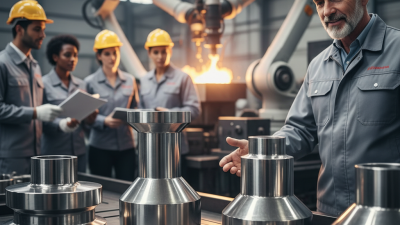
The strongest manufacturers welcome process audits, sample approval, and corrective-action reviews. Buyers should verify furnace capacity, spectrometer calibration, mold capability, machining tolerance, and export documentation. Price still matters, but it should follow technical fit and repeatable performance. Selecting the best China Stainless Steel Castings supplier is therefore a measured engineering decision, not a simple online comparison.
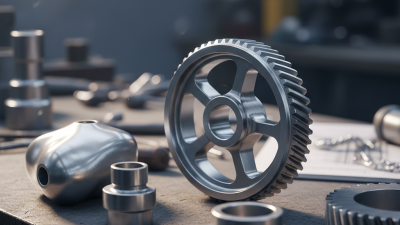
Stainless steel castings are metal components formed by pouring molten stainless steel into a prepared mold. After cooling, the part is cleaned, heat-treated, and inspected. This method creates complex shapes, internal passages, and thick sections that machining alone may not produce economically. Common grades include austenitic, martensitic, and duplex stainless steels, each offering different strength and corrosion resistance.
Demand is substantial. The International Stainless Steel Forum reported approximately 58.4 million tonnes of global stainless crude steel production in 2023. Castings represent only part of this volume, but they support demanding industries. Pumps, valves, impellers, pipe fittings, and pressure equipment often depend on cast stainless components. Food-processing systems also use them around washdown areas, where moisture and cleaning chemicals are constant concerns. Marine equipment benefits from corrosion-resistant alloys, although alloy selection must match the actual water chemistry.
The International Stainless Steel Forum reported approximately 58.4 million tonnes of global stainless crude steel production in 2023.
The casting process is not flawless. A smooth surface can hide shrinkage, porosity, or inclusions. ASTM A351 and ASTM A743 provide widely recognized requirements for many stainless steel castings, but compliance alone cannot replace process control. Reliable suppliers normally review drawings, confirm material certificates, monitor melt chemistry, and use visual, dimensional, or nondestructive testing. The less visible detail matters most. A small defect near a valve seat can become a costly failure, so inspection depth should reflect pressure, temperature, and service risk.
A reliable China stainless steel castings supplier is defined by evidence, not polished promises. World Stainless reported global crude stainless steel production of about 58.4 million tonnes in 2023. This scale increases material availability, but it also makes traceability essential. Ask for heat numbers, chemical analysis, mechanical test results, and production records for every batch. Records matter.
Quality control should cover the complete casting route. That includes wax or pattern preparation, melting, pouring, heat treatment, machining, and final inspection. A dependable supplier should explain dimensional tolerances and testing methods clearly. Useful checks include spectrometer analysis, radiographic testing, dye penetrant inspection, hardness testing, and surface measurement. ISO 9001 certification supports process discipline, but certification alone proves little. Factory evidence matters more.
Delivery reliability also depends on realistic capacity, tooling control, and corrective-action speed. Request sample inspection reports and ask how nonconforming castings are isolated. A supplier that reports defects honestly may be safer than one claiming zero problems. That sounds uncomfortable. It is also practical. The International Energy Agency identifies steelmaking as responsible for roughly 7% of global energy-related emissions, so energy records and scrap-recycling practices deserve attention. Compare production data, inspection depth, lead-time promises, and communication quality. The cheapest quotation may not be the lowest total cost after rework, delays, and rejected parts.
A dependable stainless steel castings supplier should explain every manufacturing step clearly. Production usually begins with verified scrap, ferroalloys, and virgin metal. The melt is analyzed by optical emission spectroscopy before pouring. This controls chromium, nickel, carbon, and molybdenum levels.
Induction melting reduces contamination risks. Proper mold drying prevents gas-related defects. After pouring, castings undergo controlled cooling, heat treatment, shot blasting, and machining. Heat treatment is critical because it restores corrosion resistance and reduces harmful residual stress. World Stainless reported 58.4 million tonnes of global stainless crude steel production in 2023. That scale increases the need for disciplined process control, not casual inspection.
Quality control should combine chemistry checks, dimensional measurement, hardness testing, and tensile testing. Dye penetrant inspection can reveal surface cracks. Radiographic testing can identify internal porosity. Traceability should connect each casting to its heat number, mold, operator, inspection record, and shipment.
The ISO Survey 2023 recorded more than 1.2 million ISO 9001 certificates worldwide. Certification supports consistency, but it does not replace technical evidence. A supplier should provide material certificates, test reports, calibration records, and nonconformance actions. ASTM A351/A351M and related ASTM inspection methods offer useful benchmarks for stainless pressure-retaining castings. Still, specifications vary by application.
In practice, visual inspection may miss small shrinkage cavities. Sampling can also overlook unstable production. That weakness deserves honest discussion. Regular audits, first-article approval, and trend analysis provide stronger protection than paperwork alone.
Best China Stainless Steel Castings Supplier?
What Certifications and Custom Services Should Buyers Evaluate?
A reliable stainless steel casting supplier should provide verifiable quality records, not vague claims. ISO 9001 certification can indicate controlled production and documented corrective actions. For environmental responsibility, ISO 14001 may also matter. However, certificates alone are not enough. Check the issuing body, validity period, and covered facility. Request material certificates such as EN 10204 3.1 reports, including heat numbers and chemical results. Mechanical testing, dimensional inspection, and traceability should connect each report to your casting batch. Depending on the application, pressure equipment or sector-specific approvals may be necessary. Requirements differ by market.
Custom support often separates a capable foundry from a basic supplier. Ask whether engineers review wall thickness, shrinkage risk, machining allowances, and draft angles before tooling begins. Casting simulation can reveal porosity near flanges or heavy sections. Useful services may include pattern design, rapid prototypes, heat treatment, CNC machining, passivation, surface inspection, and non-destructive testing. Clear inspection plans should define sampling, tolerances, and acceptance criteria. Small details matter.
I would not accept “finished” without measurable evidence. A first trial can still show distortion or incomplete filling. That is normal, but the supplier should document the cause and correction. Evaluate sample reports, communication speed, and the willingness to discuss defects honestly. A lower quotation may hide extra tooling, inspection, or rework costs. Ask for a realistic production schedule, not a perfect promise.
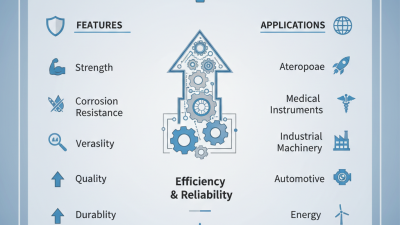
This buyer-side screening framework ranks commonly reviewed certifications and custom services on a 1–5 priority scale. ISO 9001 supports quality-system control, material traceability verifies heat and batch history, dimensional inspection confirms drawing compliance, and NDT helps identify internal or surface defects. ISO 14001, ISO 45001, PED, and IATF 16949 should be evaluated when environmental, workplace-safety, pressure-equipment, or automotive requirements apply.
Priority scores are a practical evaluation model, not market-share statistics or data from any specific company.
Best China Stainless Steel Castings Supplier?
Comparing Chinese stainless steel casting suppliers requires more than checking the unit price. Request identical drawings, material grades, tolerances, surface requirements, and order quantities from each supplier. A lower quote may exclude tooling, machining, inspection, packaging, or export costs. Ask for a detailed cost breakdown. It reveals hidden differences quickly. Confirm whether prices cover material certificates, dimensional reports, and corrosion testing. In practice, the cheapest offer is not always the most economical choice.
Lead time should be measured from approved drawings, not the first email. Check pattern or tooling preparation, sample casting, first-article inspection, and production capacity. Ask for realistic dates in writing. A supplier with strong planning should explain possible delays, such as furnace maintenance or material shortages. I have seen optimistic schedules fail because approval time was ignored. That mistake deserves attention. Compare the supplier’s normal production timeline with your required delivery date.
Tips: Send a complete technical package and request one sample before mass production. Ask how quickly engineers answer drawing questions. Confirm who manages quality reports, corrective actions, and shipping documents. Reliable support matters when a casting shows porosity or machining allowance problems. A short video of the foundry, inspection area, and packing process can add useful evidence, but it should not replace documented records. Payment terms, replacement policies, and communication frequency also deserve careful comparison.
| Supplier Profile | Typical Casting Focus | Common Stainless Grades | Typical Order Volume | Indicative FOB Price Range | Tooling / Pattern Cost | Prototype Lead Time | Production Lead Time | Quality Documentation | Engineering & After-Sales Support | Best Fit For |
|---|---|---|---|---|---|---|---|---|---|---|
| Profile A Precision Investment Casting |
Small to medium complex parts, thin walls, close dimensional requirements | CF8M / 316 CF8 / 304 17-4 PH | 100–5,000 pieces per order | US$7–16/kg | US$300–1,500, depending on part size and tooling complexity | 3–5 weeks | 5–8 weeks after approved samples | Material certificate, dimensional report, visual inspection; optional chemical and mechanical testing | DFM review, casting simulation available, English-speaking project contact, corrective-action reports | Valves, pumps, marine hardware, food-processing components |
| Profile B High-Volume Shell Casting |
Repeat-production components with stable geometry and medium tolerance requirements | CF8M / 316 CF3M / 316L CF8 / 304 | 1,000–50,000 pieces per order | US$5–11/kg | US$500–2,500, commonly amortized across production volume | 4–6 weeks | 6–10 weeks after sample approval | Heat number traceability, material certificate, process inspection records, final inspection report | Production scheduling, replenishment planning, packaging customization, 8D response for quality issues | Industrial equipment, plumbing parts, agricultural machinery |
| Profile C Large Sand Casting |
Large, heavy or low-to-medium volume castings where tooling investment must remain moderate | CF8M / 316 CF8 / 304 Duplex grades | 10–500 pieces per order | US$4–9/kg | US$200–1,200 for patterns, depending on dimensions and pattern material | 3–6 weeks | 6–12 weeks after drawing and process approval | Heat treatment record, chemical analysis, dimensional inspection; NDT usually quoted separately | Pattern design support, machining allowance review, export packing and shipment coordination | Pump bodies, valve bodies, structural housings, large industrial castings |
| Profile D Machined Casting Specialist |
Castings supplied with CNC machining, drilling, threading and functional inspection | CF8M / 316 CF3M / 316L 17-4 PH | 50–10,000 pieces per order | US$9–22/kg | US$400–2,000; fixtures may add US$150–800 | 4–7 weeks | 7–12 weeks after drawing approval | FAI report, CMM report when required, material certificate, surface-finish and pressure-test records | GD&T review, machining process planning, assembly support, replacement-part coordination | OEM components requiring reduced supplier count and ready-to-install delivery |
| Profile E Certified Pressure-Service Supplier |
Pressure-retaining castings requiring traceability, testing and stricter process control | CF8M / 316 CF3M / 316L Duplex grades | 100–8,000 pieces per order | US$10–24/kg | US$600–3,000, depending on testing and qualification requirements | 5–8 weeks | 8–14 weeks after qualification approval | Full material traceability, mechanical testing, PMI, hydrostatic testing and NDT options | Technical submittals, inspection plans, third-party inspection coordination and formal nonconformance handling | Oil and gas, chemical processing, marine and high-pressure fluid systems |
| Profile F Small-Batch Rapid Development |
Prototype and low-volume parts using rapid patterns or flexible tooling methods | CF8M / 316 CF8 / 304 17-4 PH | 10–300 pieces per order | US$14–30/kg | US$100–800; rapid tooling may reduce initial development time | 2–4 weeks | 4–7 weeks after prototype approval | Basic material certificate and dimensional report; advanced testing available at additional cost | Fast quotation, drawing feedback within 1–3 working days, prototype iteration and design-for-casting advice | New product development, replacement parts and low-volume industrial applications |
| Price ranges are indicative export-market benchmarks for stainless steel castings and can vary significantly with alloy surcharge, net weight, geometry, tolerances, machining, testing, order quantity, packaging and shipping terms. Buyers should request the same drawing, annual volume, inspection plan and delivery term from each supplier before comparing quotations. | ||||||||||