Why Choose Grate Castings for Industrial Applications?
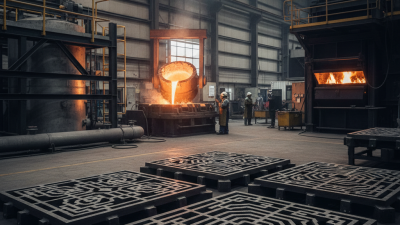
Industrial equipment often works under relentless heat, impact, abrasion, and heavy material loads. In these conditions, grate design can influence uptime, maintenance costs, and workplace reliability. Grate Castings are widely selected because they combine structural strength with practical resistance to demanding operating environments. Their performance depends on more than the metal itself. Pattern accuracy, alloy selection, heat treatment, and quality inspection all matter.
In real production settings, a well-made grate casting can support stable material flow through furnaces, kilns, crushers, and other processing systems. Its openings must remain consistent. Its supporting ribs must handle repeated stress without excessive distortion. Engineers also examine slag buildup, thermal cycling, and cleaning requirements before approving a design. Small dimensional errors may create larger problems during installation. That assumption can fail.
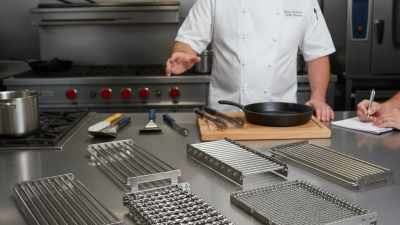
Experienced manufacturers usually verify chemical composition, hardness, surface condition, and critical dimensions. They may also use visual inspection, non-destructive testing, and process records to improve traceability. These practices help buyers compare suppliers with greater confidence. Still, no casting is perfect. Unexpected wear can result from poor alignment, unsuitable operating temperatures, or material conditions that were not considered during design.
Choosing Grate Castings, therefore, requires a balanced review of application demands, service history, and supplier capability. A lower purchase price may look attractive, yet premature replacement can cost far more. Clear drawings, realistic loading data, and regular inspection support better decisions. The strongest solution is not always the heaviest one. It is the casting that matches the process, survives its actual stresses, and remains practical to maintain.
Material Fundamentals: ASTM A48 Gray Iron Rated at 20–40 ksi Tensile Strength
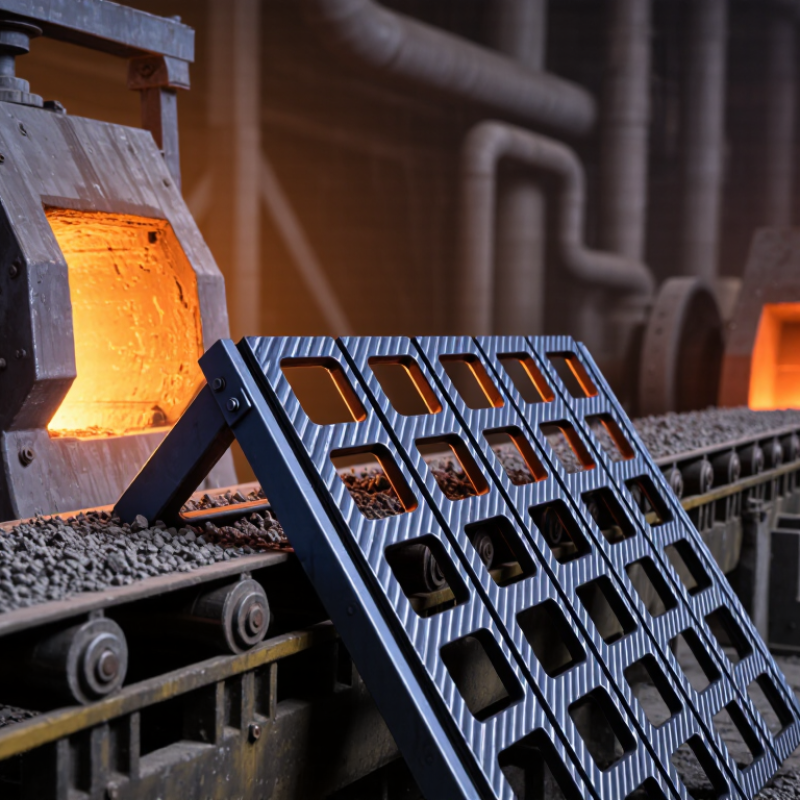
Grate castings made from ASTM A48 gray iron can suit demanding industrial settings. The material is classified by minimum tensile strength, commonly from 20 to 40 ksi. Higher classes generally provide greater tensile resistance. However, strength alone does not define service performance.
Gray iron contains graphite flakes within its iron matrix. These flakes improve vibration damping and support stable operation around crushers, furnaces, and heavy processing lines. The material also machines efficiently, leaving clean surfaces around bolt holes and seating faces. Its compressive strength is useful under steady loads. Yet gray iron is relatively brittle. It can crack from sharp impacts, sudden thermal changes, or poorly supported sections. I have seen small design assumptions become expensive repairs. Section thickness, casting quality, and local stress concentration deserve careful review.
Tips:
Specify the ASTM A48 class clearly, not only “gray iron.” Request tensile-test documentation for representative castings. Inspect corners, ribs, and mounting holes for cracks or shrinkage. Use generous radii where loads change direction. Check operating temperature and vibration before approval. A stronger class may help, but it will not correct poor geometry. CNC machining can reveal hidden defects, so inspect parts afterward. Allowing for imperfect castings is not pessimism; it is practical engineering.
Heat Resistance: Ductile Iron Grates Perform Above 400°C in Industrial Service
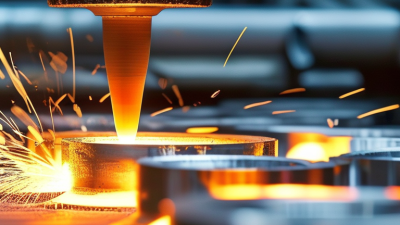
Grate castings are valued in furnaces, incineration systems, heat-treatment lines, and foundry floors because ductile iron combines strength with thermal resilience. The ASM Handbook, Volume 1, places ductile iron’s melting range near 1,150–1,200°C, leaving substantial thermal headroom above 400°C. That margin matters. It reduces the risk of rapid softening during repeated heating cycles.
In service, however, “above 400°C” is not a universal promise. Grade, section thickness, furnace atmosphere, loading, and cooling speed all affect performance. Data from the Ductile Iron Society show that ductile iron properties vary significantly by grade, while ASTM A536 defines several strength classes for controlled material selection. Engineers should also allow for thermal expansion, commonly around 10–12 micrometres per metre per degree Celsius near ambient conditions. A one-metre grate can therefore shift noticeably during a large temperature rise. Small clearances matter.
Field inspections often reveal the same practical issue: oxidation and distortion begin at edges, joints, or poorly supported areas. Correct alloy selection helps, but it cannot repair bad alignment. ASTM and foundry guidance support dimensional checks, controlled cooling, and inspection after thermal cycling. The design may survive 400°C. The installation still needs discipline.
Why Choose Grate Castings for Industrial Applications?
Heat Resistance: Ductile Iron Grates Perform Above 400°C in Industrial Service
The chart highlights the 400°C industrial-service reference point and shows why ductile iron grates are selected for high-temperature applications. Actual service limits depend on alloy chemistry, grate geometry, thermal cycling, loading, oxidation, and installation conditions.
Wear Control: Chromium-Alloy Castings Can Reach 55–65 HRC Surface Hardness
Why Choose Grate Castings for Industrial Applications?
Wear Control: Chromium-Alloy Castings Can Reach 55–65 HRC Surface Hardness
Industrial grates often face abrasive feed, falling material, and repeated heat exposure. Chromium-alloy castings can provide surface hardness between 55 and 65 HRC. This hardness helps resist grooving, cutting, and material loss during demanding operation. The result can be longer service intervals and fewer unplanned replacements.
Hardness is only one part of the decision. A grate with excessive hardness may become brittle under impact. Poor alloy balance, uneven cooling, or casting defects can create weak points. Practical selection should consider abrasion type, operating temperature, load pattern, and maintenance history. Test coupons and hardness checks offer useful evidence before full production.
Details matter. A worn grate often shows deep channels near high-flow areas. Microscopic cracks may appear around sharp corners. Experienced engineers examine these patterns before changing the alloy or thickness. Chromium content, carbon level, heat treatment, and section size must work together. Not every application needs 65 HRC. Sometimes, slightly lower hardness provides better toughness and more stable performance. That trade-off deserves careful review.
Lifecycle Value: Cast Grates Deliver Recyclability with 90%+ Metal Recovery Potential
Why Choose Grate Castings for Industrial Applications?
In foundries, wastewater plants, and heavy-duty walkways, grate castings face impact, heat, moisture, and repeated loading. Their strength begins with the casting process, which allows robust sections and practical shapes. Engineers can specify openings for drainage, airflow, or debris control. A well-fitted grate also reduces rocking during service. Still, design drawings are not enough. Site measurements, load cycles, and maintenance access need review by experienced personnel.
The strongest lifecycle argument is material recovery. At the end of service, cast metal grates can enter established scrap streams instead of becoming permanent waste. With suitable sorting and processing, many ferrous castings offer 90% or higher metal recovery potential. Actual recovery depends on alloy, coatings, attached concrete, contamination, and regional recycling capacity. That distinction matters. Recovery is potential, not a guarantee. Small fasteners and packed mud can complicate recycling. Designing removable sections and recording the alloy can improve results. It also supports better procurement decisions over the asset’s life.
Tips: Ask for the casting alloy and weight before purchase. Keep installation records and inspect cracks after abnormal loading. Plan lifting points for removal. Avoid permanent fillers that trap soil or chemicals. Check local recyclers before replacement.
One weakness remains: heavy castings may require lifting equipment. Include that cost early.