2026 Best Ductile Iron Castings Suppliers for Global Buyers
Choosing reliable Ductile Iron Castings suppliers requires more than comparing prices, production volume, or attractive websites. Global buyers need evidence of process control, metallurgical experience, dimensional accuracy, and consistent delivery. The World Foundry Organization and Modern Casting’s latest global production census reports more than 100 million tonnes of metal castings produced worldwide each year. That scale shows the industry’s importance. It also exposes a difficult truth: supplier capability can vary sharply between regions, plants, and individual production lines.
The strongest suppliers usually demonstrate traceability from charge materials to final inspection. Their records should cover chemical composition, nodular graphite structure, tensile strength, elongation, hardness, and heat-treatment results. ASTM A536 and ISO 1083 provide useful reference points for ductile iron grades, but certification alone is not enough. Site audits, sample reports, and verified customer experience still matter. As casting authority Professor John Campbell has stated, “The quality of a casting is determined before it is poured.” That principle remains highly practical. A clean ladle, stable inoculation practice, and controlled pouring temperature can determine whether a housing survives years of vibration or fails during testing.
This 2026 guide examines leading Ductile Iron Castings suppliers for international purchasing teams. It considers manufacturing capacity, quality systems, export experience, tooling support, lead times, and technical communication. No ranking is perfect. Supplier data may change, and published claims deserve scrutiny. Buyers should compare production evidence, not promises. Even a small detail matters, such as how clearly a supplier explains a rejected batch. Reliability is often visible there.
What Are Ductile Iron Castings and Why Do They Matter?
What Are Ductile Iron Castings and Why Do They Matter?
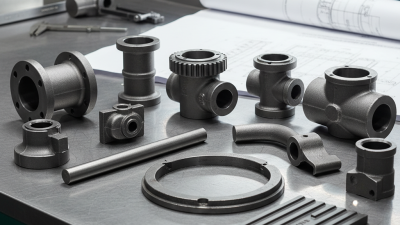
Ductile iron castings are iron components containing nodular graphite. This structure improves toughness, fatigue resistance, and machinability. Unlike grey iron, ductile iron bends slightly before fracturing. That small difference matters inside pipes, pump housings, brake parts, and heavy equipment joints.
The World Foundry Organization’s 2023 Census reported more than 100 million tonnes of castings produced globally in 2022. Ductile iron remains important because it combines steel-like strength with efficient casting. ASTM A536 grades commonly provide tensile strengths above 400 MPa. Actual performance depends on chemistry, heat treatment, section thickness, and inspection quality.
100 million tonnes
The World Foundry Organization’s 2023 Census reported more than 100 million tonnes of castings produced globally in 2022.
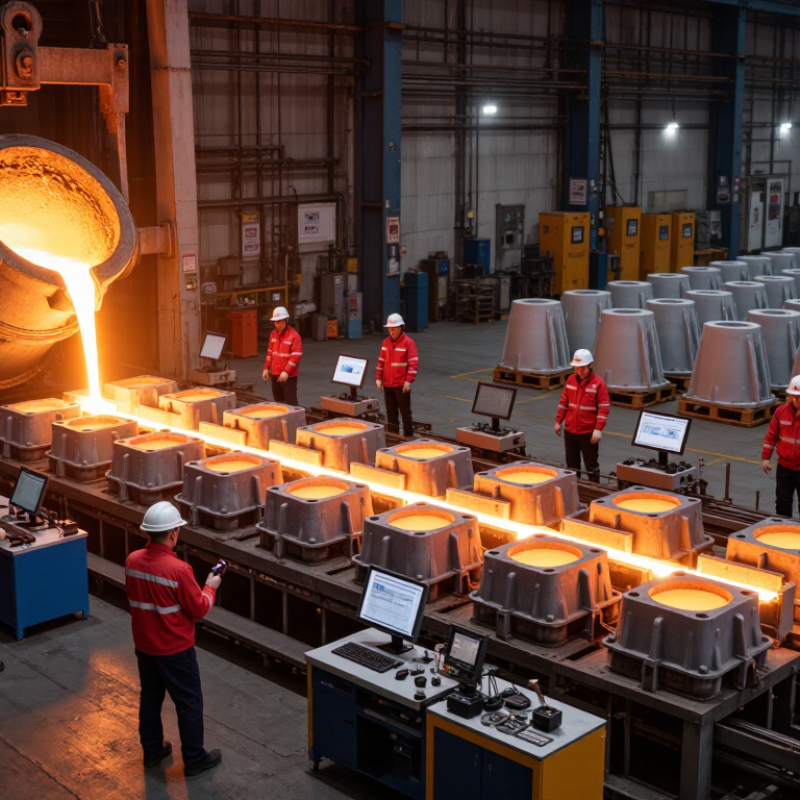
A reliable supplier should show melt records, metallographic results, dimensional reports, and traceable test certificates. Ask how nodularity is measured, not merely whether it is “good.” Poor graphite shape can reduce impact resistance. The U.S. Department of Energy’s metalcasting studies identify melting as the dominant energy-consuming stage, often approaching half of foundry energy use. This affects both cost and environmental performance.
Ductile iron is not automatically the best choice.
Thin sections may cool unevenly, and complex designs can hide shrinkage defects.
I have seen drawings that looked practical but required costly machining changes. Early simulation, sample validation, and honest discussion with foundry engineers usually prevent that mistake. Suppliers should explain limitations clearly, even when the answer is inconvenient.
Key Criteria for Selecting a Reliable Casting Supplier
In 2026, global buyers need more than a low casting price. A reliable ductile iron supplier should prove technical control, production stability, and honest communication. Ask about furnace capacity, nodularity control, heat treatment, and machining tolerance. Request recent material certificates and sample inspection reports. Details matter.
Traceability should follow each casting from charge materials to final inspection. A clear batch code, pouring record, and dimensional report can prevent costly disputes. Check whether the supplier uses calibrated spectrometers, hardness testers, and coordinate measuring equipment. Ask how often these tools are verified. Inspect the basics.
Experience becomes visible during difficult projects. The supplier should explain how it handles shrinkage, porosity, complex cores, and drawing changes. A practical engineering team will review wall thickness before tooling begins. It should also provide realistic mold costs, sampling dates, and production lead times. Promises without production evidence deserve caution.
Evaluate communication, not just machinery. During a site audit, observe how workers identify defects and record corrective actions. Speak with current buyers when possible, but remember that references may be selective. A polished factory visit proves little by itself. Even a capable supplier can miss a deadline or misread a specification. The important question is how quickly and openly it responds. Buyers should also review packing methods, export documents, after-sales support, and contingency plans. A cheaper quote may become expensive after rework, delayed shipments, or unclear responsibility. Reliable sourcing requires evidence, repeated checks, and a willingness to challenge comfortable assumptions.
Top Ductile Iron Casting Suppliers for Global Buyers in 2026
Top ductile iron casting suppliers for global buyers should prove process capability, not merely advertise capacity. The 2023 World Casting Census reported about 109 million tonnes of castings produced worldwide in 2022. That scale increases buyer choice, but quality can vary sharply between foundries. Experienced sourcing teams should request tensile results, nodular graphite images, chemical certificates, and sample inspection records. ISO 1083 and ASTM A536 remain useful reference points for ductile iron grades and mechanical performance.
Look for suppliers with controlled inoculation, automated molding, and stable furnace records. Ask how they manage shrinkage near flanges, porosity around thick hubs, and dimensional drift after machining. These details matter. A serious supplier should provide heat numbers, spectrometer results, hardness data, and traceability from charge materials to shipment. Independent reports from the International Organization of Motor Vehicle Manufacturers also show continued global vehicle production, supporting demand for durable iron components in transport and industrial equipment.
Cost still requires caution. Recent market studies estimate steady growth in the ductile iron casting sector, but their figures differ because product categories and regions are defined differently. That inconsistency deserves attention. Compare landed cost, rejection rates, tooling ownership, inspection fees, and delivery reliability—not only the quoted kilogram price. A pilot batch can expose problems earlier. It may also reveal that a seemingly “best” supplier needs stronger machining controls or clearer documentation.
Pricing, Logistics, and Import Considerations for International Orders
For global buyers, ductile iron casting prices rarely end with the supplier’s quoted unit cost. A reliable comparison should include pattern charges, machining, coating, packaging, inspection, inland delivery, ocean freight, insurance, duties, and broker fees. The World Bank’s Logistics Performance Index 2023 shows clear differences in customs efficiency and shipment reliability between markets. These differences can change the landed cost significantly.
Check the quotation line by line.
Ask for the casting weight, grade, dimensional tolerance, and testing method. A small weight variation can affect material usage and freight charges. Require a sample inspection report, including tensile strength, elongation, hardness, and metallographic results. ISO 1083 is widely used for ductile iron classification, but the purchase contract should name the exact grade and acceptance standard.
Shipping also needs practical planning. UNCTAD’s Review of Maritime Transport 2023 states that shipping carries over 80% of global merchandise trade by volume. Yet port congestion, transshipment, and seasonal surcharges can disrupt delivery dates. Request both FOB and delivered-cost options. Confirm container loading, wooden-crate treatment, moisture protection, and cargo insurance. HS classification should be verified with a licensed customs broker, because casting, machining, and finished-assembly classifications may differ.
The cheapest quote may be incomplete.
A useful safeguard is a landed-cost worksheet with three freight scenarios. Add a contingency of 5% to 10% for inspection, storage, or currency movement. This is imperfect, but ignoring those variables is usually more expensive.