2026 Top Wear Resistant Rollers for Global Buyers?
As the global manufacturing landscape evolves, the importance of wear resistant rollers has grown significantly. These components are essential in various industries, including mining, construction, and agriculture. According to a recent report by MarketsandMarkets, the wear resistant roller market is projected to reach USD 1.2 billion by 2026, reflecting a growing demand for durable and efficient machinery parts.
Wear resistant rollers play a crucial role in enhancing the lifespan of equipment. They reduce downtime and maintenance costs. In sectors like mining, the wear and tear on equipment can lead to substantial financial losses. However, not all manufacturers prioritize quality. The market is rife with options, which can be overwhelming for buyers. It's vital to choose rollers based on proven performance and manufacturer reputation.
While the market shows promise, buyers should be cautious. Recent data reveals that not all brands provide the expected durability. Some products may wear out faster than advertised. This inconsistency can create challenges in operational efficiency. Thus, careful consideration is required when selecting wear resistant rollers to ensure long-term reliability and performance.

2026 Wear Resistant Rollers: An Overview of Global Market Trends
The global market for wear-resistant rollers is witnessing significant changes as industries evolve. According to a recent report by market analysts, the global demand for these specialized components is projected to grow by approximately 5% annually through 2026. This growth is fueled by increasing requirements in sectors such as manufacturing and transportation. Companies are seeking rollers that improve longevity and reduce maintenance costs, addressing productivity challenges.
Despite the positive outlook, the market faces hurdles. A notable concern is the inconsistency in quality across various suppliers. This can lead to increased downtime, impacting operations significantly. Additionally, advancements in material science introduce new options, yet not all innovations are successfully integrated into existing supply chains. It’s essential for buyers to weigh the benefits against potential risks.
Emerging economies are driving a shift in market dynamics. As industries in these regions expand, they present unique challenges for manufacturers. Adopting wear-resistant rollers that align with local needs can be complex. Industry leaders suggest a thorough assessment of supplier capabilities. Striving for balance between quality and cost remains critical. The landscape is changing, but thoughtful decisions can lead to successful outcomes.
2026 Wear Resistant Rollers: Global Market Trends
Key Features and Technologies in Wear Resistant Rollers for 2026
As we step into 2026, wear-resistant rollers have become crucial in various industrial applications. These rollers are designed to endure tough working conditions. Their ability to resist wear and tear significantly enhances equipment longevity. This makes them a valuable investment, especially in high-demand sectors like construction and manufacturing.
Key features of wear-resistant rollers include advanced materials and innovative designs. Many of them incorporate composite materials that combine strength and flexibility. This allows the rollers to adapt to different surfaces. The technology behind these rollers is evolving. Enhanced surface treatments have improved scratch resistance and reduced friction. Some designs even feature self-lubricating properties, which minimize maintenance needs.
However, challenges remain. Despite advancements, achieving uniform performance under all conditions can be tricky. Rollers may behave differently in extreme temperatures or intense loads. Buyers should consider these factors when choosing rollers. Testing in real-world conditions can provide insights into their reliability. Understanding these variables is essential for making informed purchasing decisions.
2026 Top Wear Resistant Rollers for Global Buyers
| Roller Type |
Material |
Hardness (HRC) |
Max Temperature (°C) |
Typical Applications |
Wear Resistance Rating |
| Polyurethane Rollers |
Polyurethane |
85-95 |
80 |
Conveyors, Material Handling |
Excellent |
| Steel Rollers |
High Carbon Steel |
50-60 |
400 |
Mining, Construction |
Good |
| Ceramic Coated Rollers |
Alumina Ceramic |
>70 |
600 |
Textile, Print Industry |
Outstanding |
| Rubber Coated Rollers |
Natural Rubber |
60-70 |
100 |
Food Processing, Printing |
Good |
| Composite Rollers |
Fiber Reinforced Plastic |
20-30 |
150 |
Packaging, Paper Industry |
Fair |
Top Global Manufacturers of Wear Resistant Rollers to Watch
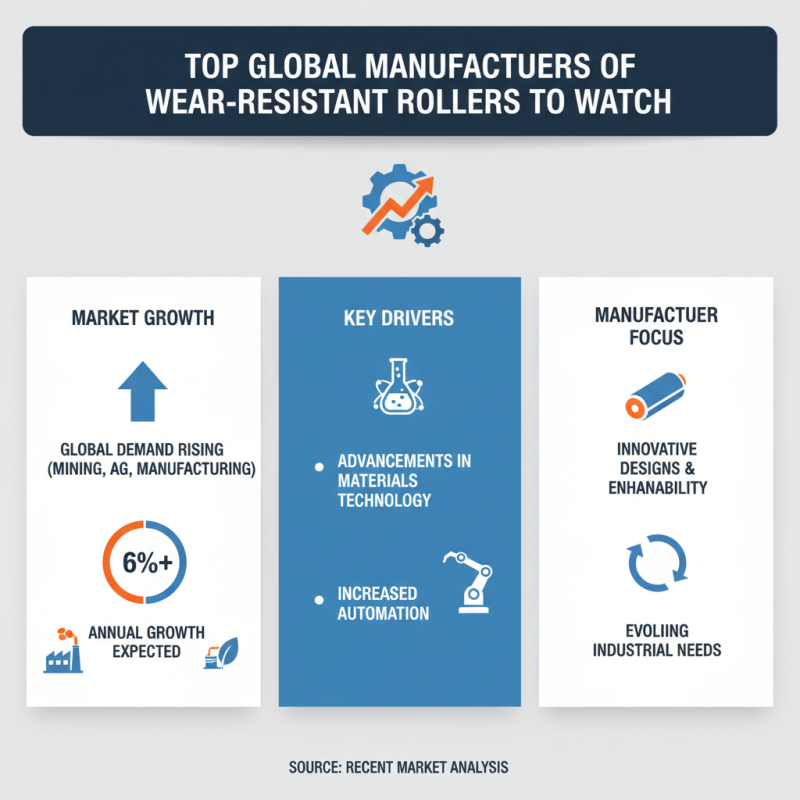
The global demand for wear-resistant rollers continues to rise, driven by industries such as mining, agriculture, and manufacturing. According to a recent market analysis, the wear-resistant roller market is expected to grow by over 6% annually, fueled by advancements in materials technology and increased automation. Key manufacturers in this sector are focusing on innovative designs and enhanced durability to meet the evolving needs of industrial applications.
When evaluating manufacturers of wear-resistant rollers, consider their experience in the industry. A long-standing presence often indicates reliability and technical expertise. Look for companies that have invested in research and development. Their focus on innovation is crucial for providing high-quality products. Industry reports suggest that roller durability can directly affect the efficiency of production processes.
Tip: Ask for samples or prototypes before making bulk purchases. This helps ensure the product meets your operational standards. Additionally, pay attention to customer feedback and industry reviews. They provide insights into the reliability of the manufacturer. Understanding these aspects can lead to better purchasing decisions and improve overall production efficiency.
Applications of Wear Resistant Rollers Across Various Industries
Wear resistant rollers play a critical role across various industries. These components endure significant wear and tear, making their applications essential in sectors like manufacturing, mining, and logistics. According to a recent industry report, the global demand for wear resistant rollers is projected to reach USD 3.5 billion by 2026. This growth reflects their increasing importance in enhancing operational efficiency.
In manufacturing, wear resistant rollers help maintain smooth operations. They ensure that machinery runs without interruptions. This is particularly vital in assembly lines where downtime can lead to substantial losses. The mining sector benefits from these rollers too. They handle the rough treatment and heavy loads typical in ore processing and material transport. Enhanced durability translates to fewer replacements and reduced operational costs.
Tip: When selecting wear resistant rollers, check the material compositions. Assessing the specific application also helps ensure longevity. Not all rollers are suited for every task.
Moreover, warehouse and logistics operations rely heavily on these rollers. They facilitate the quick movement of goods. However, uneven wear patterns can occur, highlighting the need for consistent inspections. Down the line, these small details aid operational success.
Tip: Regular maintenance can prolong the lifespan of rollers. Set up a monitoring schedule for best results. This proactive approach can mitigate unforeseen issues.
Consumer Considerations When Selecting Wear Resistant Rollers in 2026
When selecting wear-resistant rollers in 2026, buyers must consider several key factors. The material composition of rollers plays a crucial role in their durability. For instance, materials like polyurethane and nylon offer excellent resistance to abrasion and wear. Buyers should assess the specific environment where the rollers will be used. Different applications may require different properties, including load-bearing capacity and temperature tolerance.
Tips: Always check for certifications that validate the quality of the rollers. Look for evidence of testing and compliance with industry standards. This information can provide insights into the roller's reliability.
Another factor is the roller’s design. Advanced geometries can optimize performance and reduce wear over time. It’s worth noting that not all designs suit every application, and mismatches can lead to faster wear or inefficiencies. Buyers should consult with experts to understand the best options for their needs.
Tips: Don’t hesitate to ask for samples before committing to a bulk order. Testing various rollers in real-world scenarios can reveal strengths and weaknesses. This proactive approach helps in making informed decisions.