2026 Top Abrasion Resistant Steel Types for Global Buyers
Choosing the right Abrasion Resistant Steel in 2026 requires more than comparing hardness numbers. Global buyers must examine wear conditions, impact loads, plate thickness, operating temperature, and fabrication limits. AR400, AR450, AR500, and AR600 grades can perform differently under the same working conditions. The correct choice depends on the actual failure mechanism.
Tribology pioneer J. F. Archard expressed the governing principle: “The amount of wear is proportional to the load and the sliding distance, and inversely proportional to the hardness.” His principle remains useful, but hardness alone cannot predict service life. A quarry chute may face sharp rock, repeated impact, and abrasive sliding. A dump-body floor may need better toughness and easier welding. These details matter.
This guide reviews the leading Abrasion Resistant Steel types considered by international buyers for 2026. It compares hardness, toughness, weldability, machinability, thickness availability, and typical applications. It also considers certificates, heat-treatment consistency, traceability, and supplier support. Reliable purchasing decisions require verified mill data, not attractive claims alone.
There is no universal best grade. That statement is easy to overlook. A harder plate may resist scratching, yet crack under severe impact. A softer grade may offer easier fabrication and better field performance. I would not treat any ranking as permanent, because production routes and regional supply conditions continue changing. Buyers should confirm current standards, test reports, delivery capability, and welding recommendations before placing an order. Small assumptions can become expensive repairs.
What Defines Abrasion-Resistant Steel in 2026
In 2026, abrasion-resistant steel is defined by performance, not hardness alone. Buyers need a balanced system: hardness, toughness, weldability, and stable chemistry. A plate may resist sliding rock yet crack beside a weld. That is not durable protection. Practical evaluation starts with the working material, impact energy, contact pressure, temperature, and expected service hours. A quarry chute and a grain conveyor face different wear patterns. The same grade may not suit both. Not always.
Modern grades often use nominal hardness ranges, but results need context. Test methods, sampling positions, plate thickness, and heat-treatment history can affect measurements. Reliable suppliers should provide traceable mill certificates, inspection records, and clear tolerances. Independent verification adds confidence when downtime is expensive. Chemistry also matters because carbon and alloying elements influence hardenability, welding procedures, and repair risk. Hardness alone misleads. Harder steel can become brittle under repeated impact.
For global buyers, a useful specification must match fabrication reality. Ask about cutting limits, preheating guidance, bend radius, weld consumables, and replacement availability. Confirm that delivered plates match the tested condition, not only the catalog description. Selection teams sometimes focus too heavily on initial price. That mistake can create shorter service intervals. A better review compares cost per operating hour, downtime, maintenance labor, and safety margins. Field feedback should still challenge the specification. The best material survives the actual wear mechanism while remaining workable in the workshop.
How Wear-Resistant Steel Grades Are Classified
For global buyers, abrasion-resistant steel is usually classified by hardness, chemistry, and verified performance. The clearest shorthand is the nominal Brinell grade: AR400, AR450, and AR500 indicate approximate hardness levels near 400, 450, and 500 HBW. These numbers are not universal promises. Plate thickness, heat treatment, and testing location can change the result.
ASTM A6/A370 procedures support mechanical testing, while ASTM G65 measures abrasive wear through a dry-sand rubber-wheel method. European buyers may reference EN 10025-related requirements or supplier-specific wear-resistant grades. Classification should also include yield strength, impact toughness, weldability, and dimensional range. A harder plate can resist scratching longer, but it may be less forgiving during bending or fabrication.
The World Steel Association reported about 1.88 billion tonnes of crude steel production in 2024. That scale explains why consistent grade definitions matter across mining, recycling, construction, and bulk handling. Still, hardness alone is an incomplete buying tool. A 500 HBW plate may perform poorly in high-impact service if toughness is ignored. I would request the mill certificate, actual hardness readings, Charpy results where relevant, and the declared test standard. Small omissions cause expensive surprises. The classification looks simple. Real service is not.
Top Abrasion-Resistant Steel Types for Global Buyers
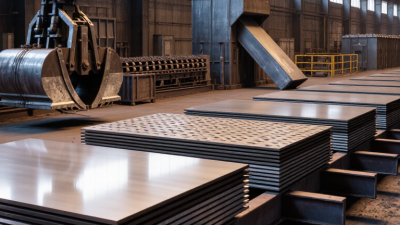
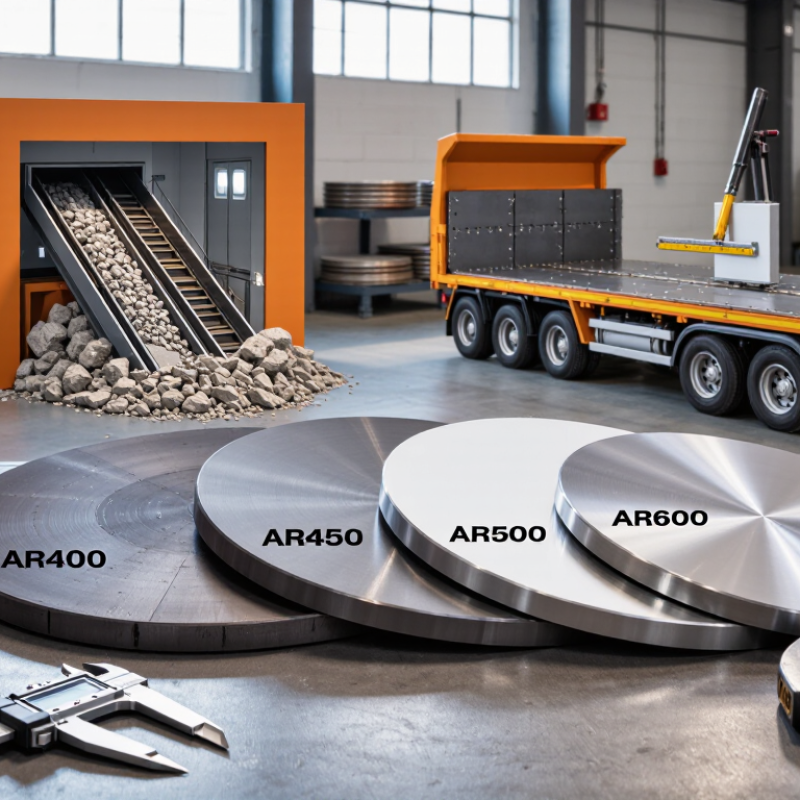
Global buyers usually compare abrasion-resistant steel by hardness, toughness, thickness, and delivery condition. Common grades include
AR400,
AR450,
AR500, and
AR600.
The number generally indicates approximate Brinell hardness, although actual values vary by specification and heat treatment.
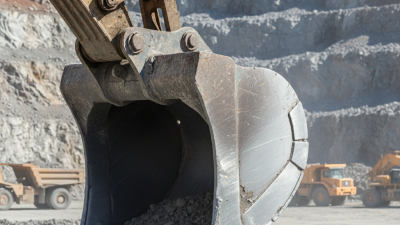
AR400 and AR450 suit dump bodies, hoppers, chutes, and wear liners facing moderate impact.
AR500 offers stronger resistance for severe sliding abrasion, such as mining screens and crusher components.
AR600 can extend service life in highly abrasive zones, but it may be less forgiving during cutting, drilling, and forming.
Harder is not always better.
That trade-off matters.
Buyers should check
chemistry,
hardness mapping,
impact values,
plate thickness, and
ultrasonic testing records.
Quenched and tempered steel often provides a practical balance between wear resistance and toughness.
Weldability depends on carbon equivalent, preheating, consumables, and workshop control.
Cutting can also create a heat-affected edge, especially on thicker plate.
This detail is often underestimated.
A reliable purchase file should include
mill certificates,
dimensional tolerances,
inspection results, and
traceable heat numbers.
Confirm the test standard before comparing quotations; identical grade names may follow different regional requirements.
Real service conditions still decide performance.
Abrasive particles, impact frequency, moisture, and maintenance quality can change results.
No single grade wins everywhere.
How to Match Steel Types with Working Conditions
2026 Top Abrasion Resistant Steel Types for Global Buyers
How to Match Steel Types with Working Conditions
Choosing abrasion resistant steel starts with the material causing wear. Sharp rock, wet sand, coal, and scrap create different damage patterns. Hardness matters, but it is not the whole decision.
For sliding wear, medium-hard grades often provide a practical balance between service life and machinability. Their surfaces resist scratching from sand and mineral flow.
For heavy impact, tougher grades are safer. A very hard plate may crack when a loaded bucket strikes it at low temperatures. That failure is expensive.
Consider temperature, plate thickness, and fabrication methods. In cold regions, verify impact toughness instead of relying only on hardness values. Thick plates may cool unevenly after welding. This can increase residual stress near joints. Preheating and controlled cooling should follow qualified procedures. Small details matter.
Wet or corrosive environments need extra care. Abrasion resistant steel is not automatically corrosion resistant. Water chemistry, drainage, and protective coatings can change the service result. Ask for traceable test certificates, chemical composition, hardness ranges, and impact data. Inspect the actual plate surface before fabrication.
Field experience often exposes weak assumptions. A grade that performed well in a quarry may fail in a recycling plant. Usage records should guide the final choice. When conditions are uncertain, trial sections and scheduled thickness measurements can reveal more than a catalog claim.